Located in Central America, Guatemala is a fantastic destination to visit. With so much on offer to do and see, it’s a backpackers paradise. Known for active volcanos, ancient Mayan ruins, and rainforests; the name Guatemala means ‘place of many trees’. It’s also pretty cheap, especially compared with Costa Rica, which we were very happy about.
Guatemala City
We had flown directly from San José (Costa Rica) to Guatemala City, Guatemala’s busy capital. Due to time restraints, we sadly had to skip Nicaragua, El Salvador, and Honduras. These three will be saved for another trip.
We stayed at a wonderful accommodation, called Hostel de Lucca. Lucca being the adorable 2 year old son of his hostel owner parents, Bianca and Marco. I thought it was funny that his English was better than Leon’s Spanish. It was more of a home stay as we were actually staying with them in their large family house, which made it was such a lovely welcoming experience. We planned our Guatemala trip here and caught up on some much needed life admin.
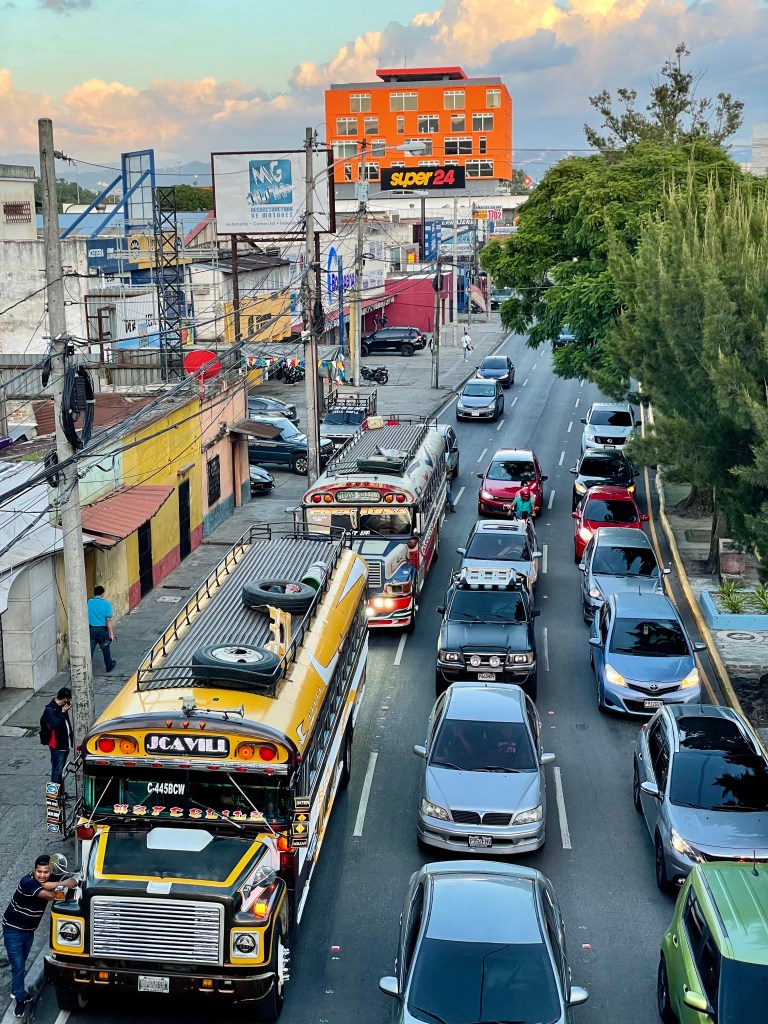
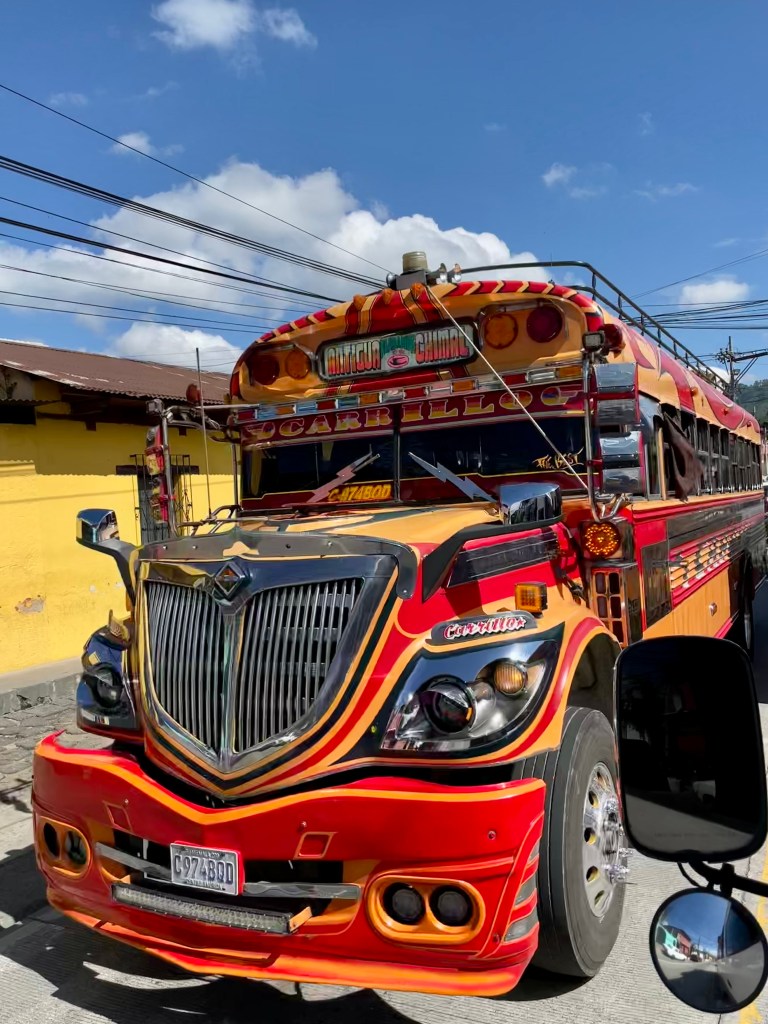
The first thing I noticed about Guatemala is that they have the coolest buses around. Old US school buses are brought here and then repurposed and pimped out with bold bright colours, flashing lights, and loud sound systems. By far the cheapest, and most uncomfortable, way to get around Guatemala.
After a couple of nights here, Bianca and Marco drove us to Antigua in their family car, it was only a 45 minute drive from Guatemala City.
Antigua
Nestled between three volcanos, Fuego (3763m), Acatenango (3976m) and Agua (3766m), Antigua’s setting is gorgeous. Antigua is a stunning mix of colonial Spanish architecture and trendy, flowery neighbourhoods. Similar vibes to San Pedro de Atacama in Chile if you’ve ever been.

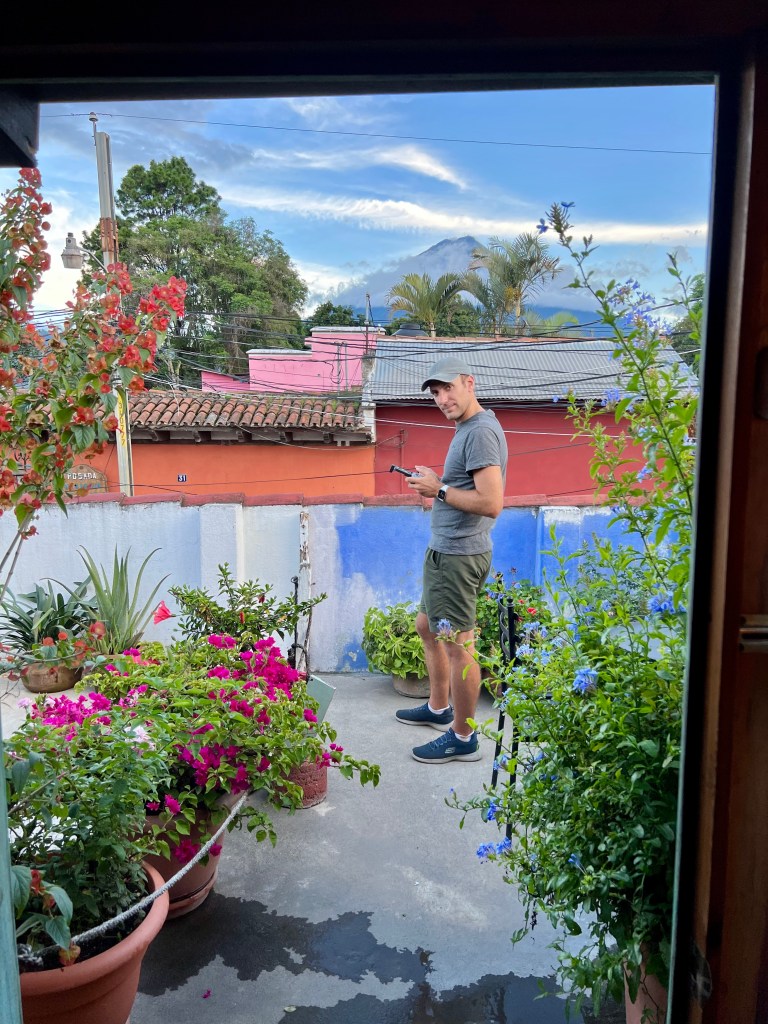
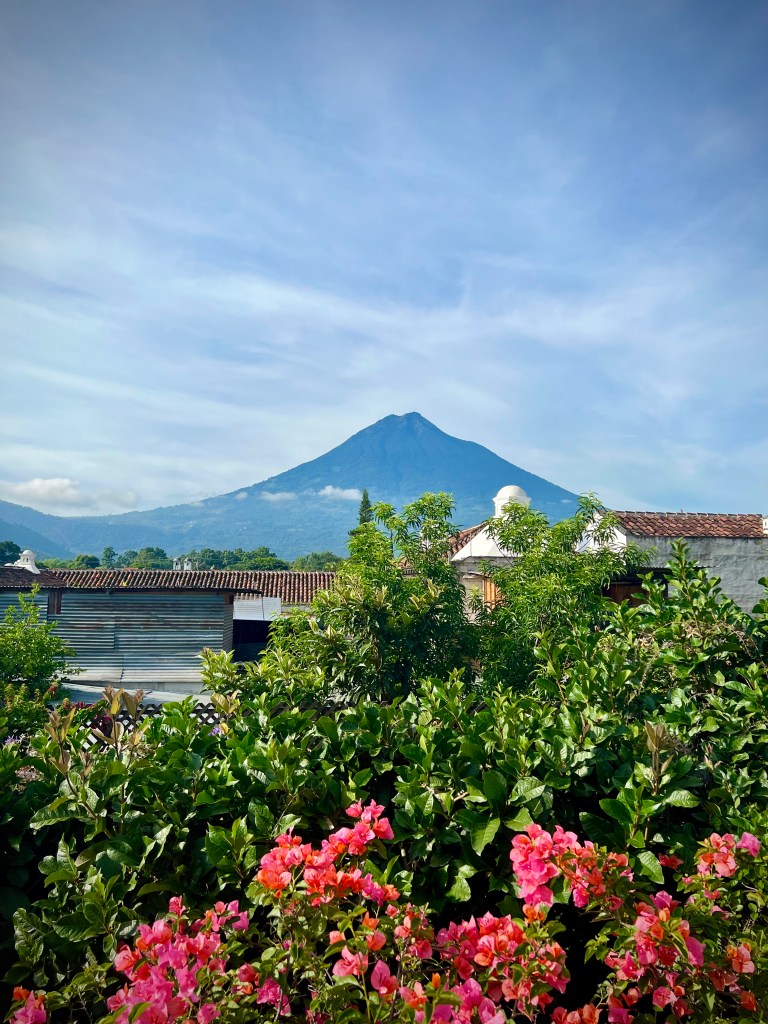
We were overwhelmed with choice for stunning boutique hostels, but we picked Yellow House; pictured below is the view from our doorway of one of the volcanos. We even had a private balcony!
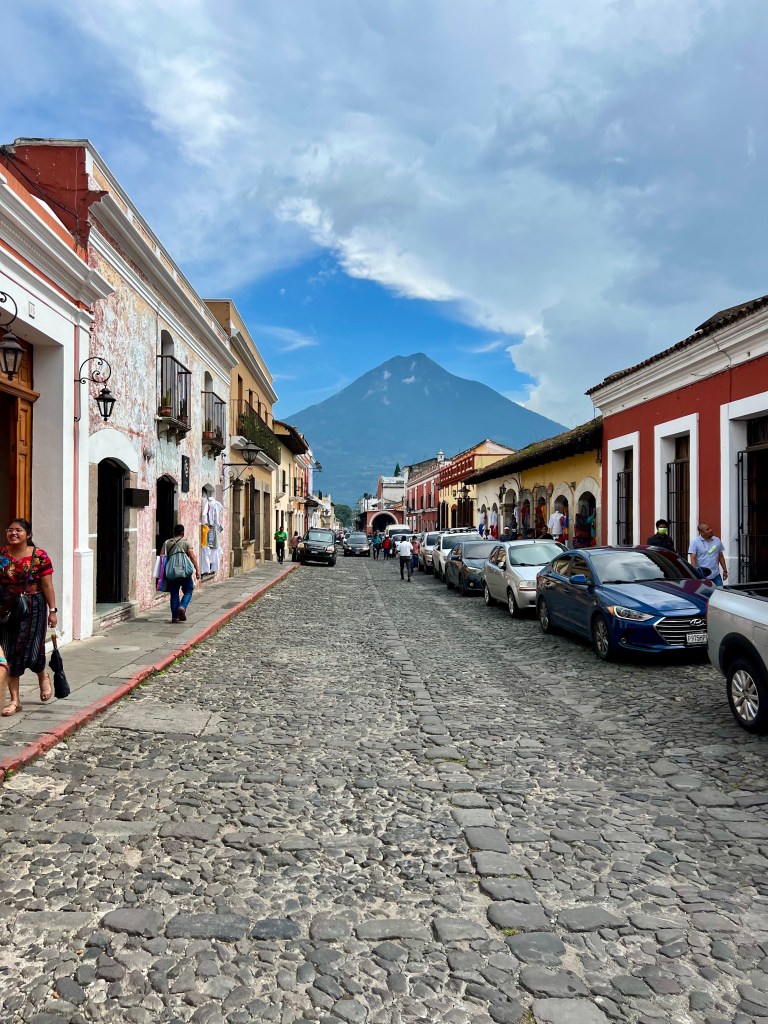
We actually ended up spending the whole day with Bianca, Marco, and little Lucca. They kindly toured us around Antigua and showed us the sights. The cobblestone streets and buildings are so gorgeous and colourful, it was hard not to fall in love with this charming little city.
The city’s world heritage listed status means that even the fast food chains have to hide themselves behind the beautiful traditional building façades. Check out the inside of the best looking Starbucks we had ever seen, pictured below.

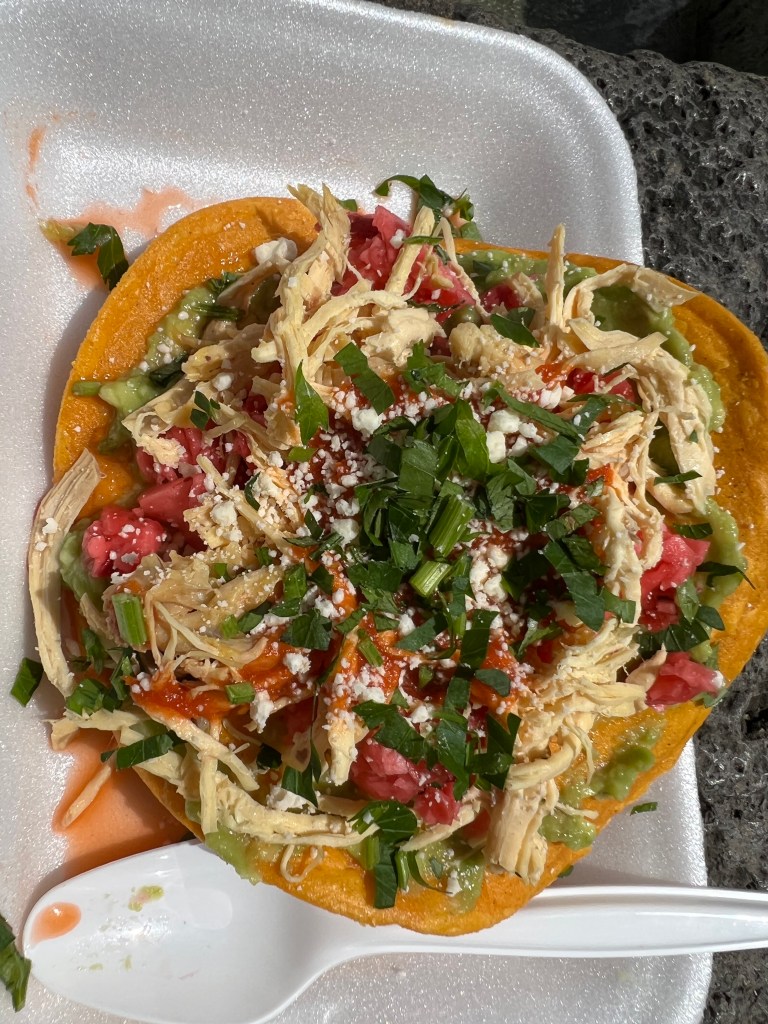
They introduced us to popular Guatemalan street food: tostadas (pictured below). A crispy fried tortilla with your choice of toppings, yum.
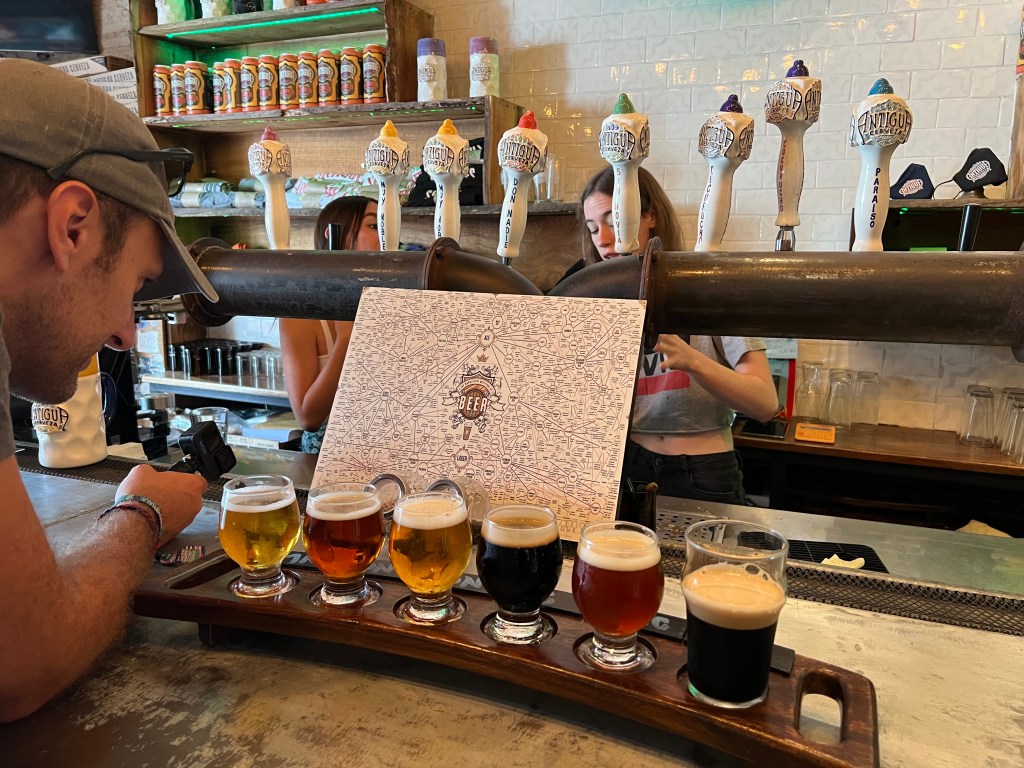
We went for drinks together at Antigua’s famous brewery. One thing we’ve learnt from this trip: almost everywhere has a micro brewery!
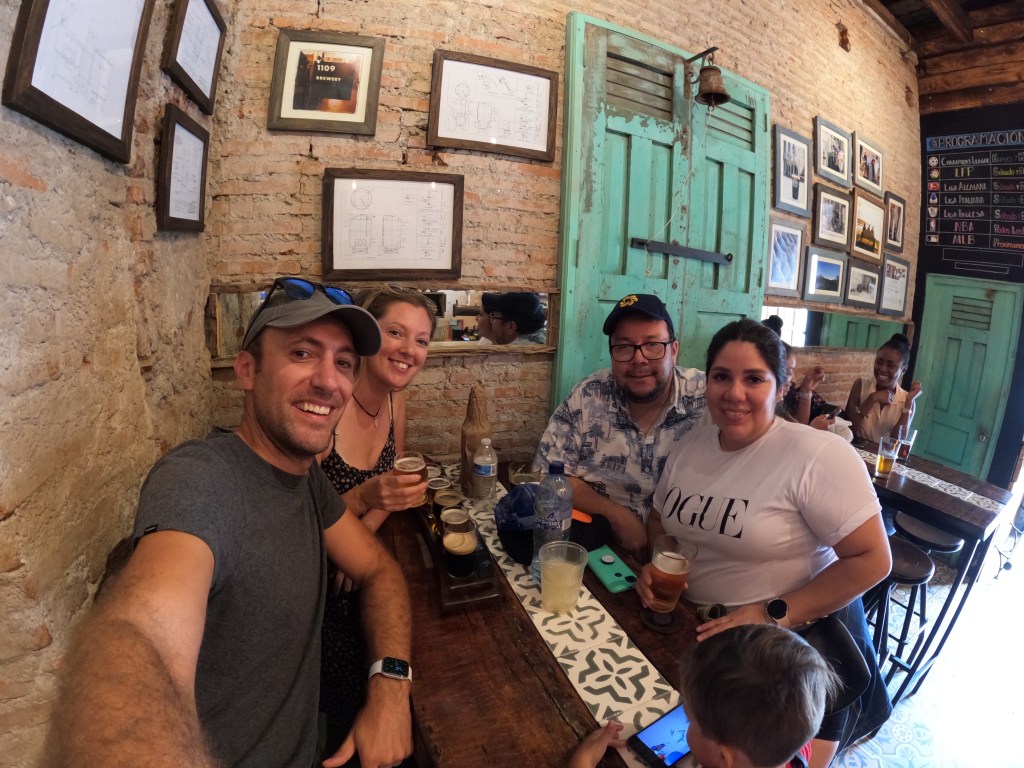
We decided to share the flight of beers, so we could try many as possible. They were absolutely delicious.
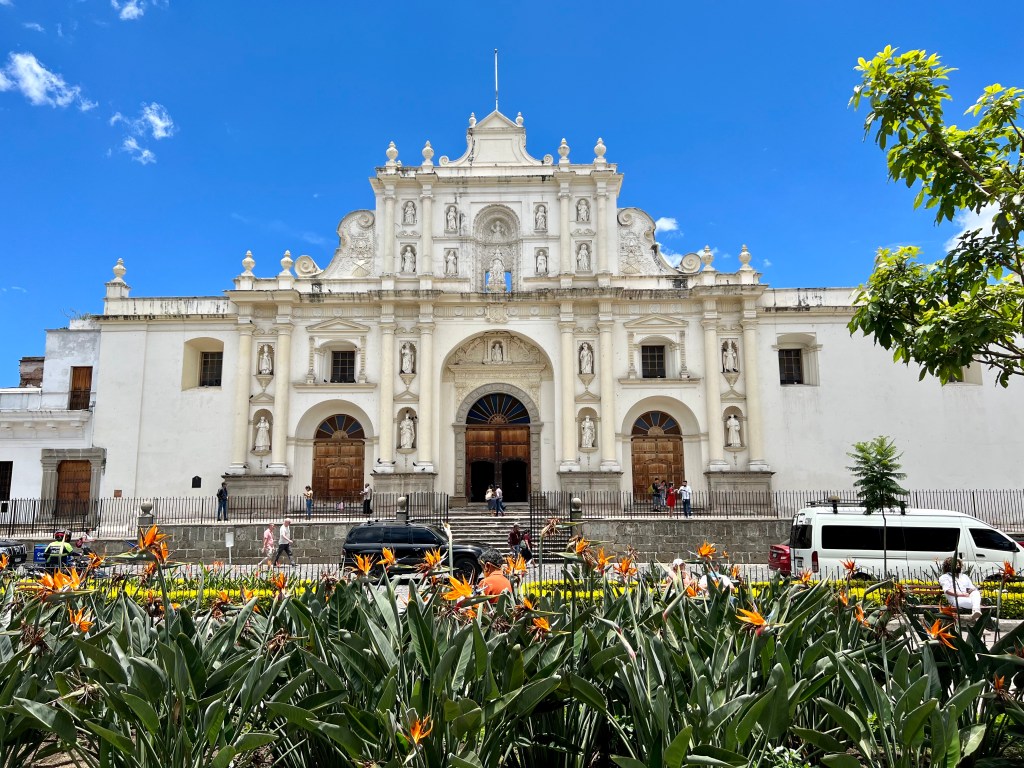
They took us round the central plaza, which dates back to 16th century when the city was founded. Pictured below is the stunning cathedral in the plaza.
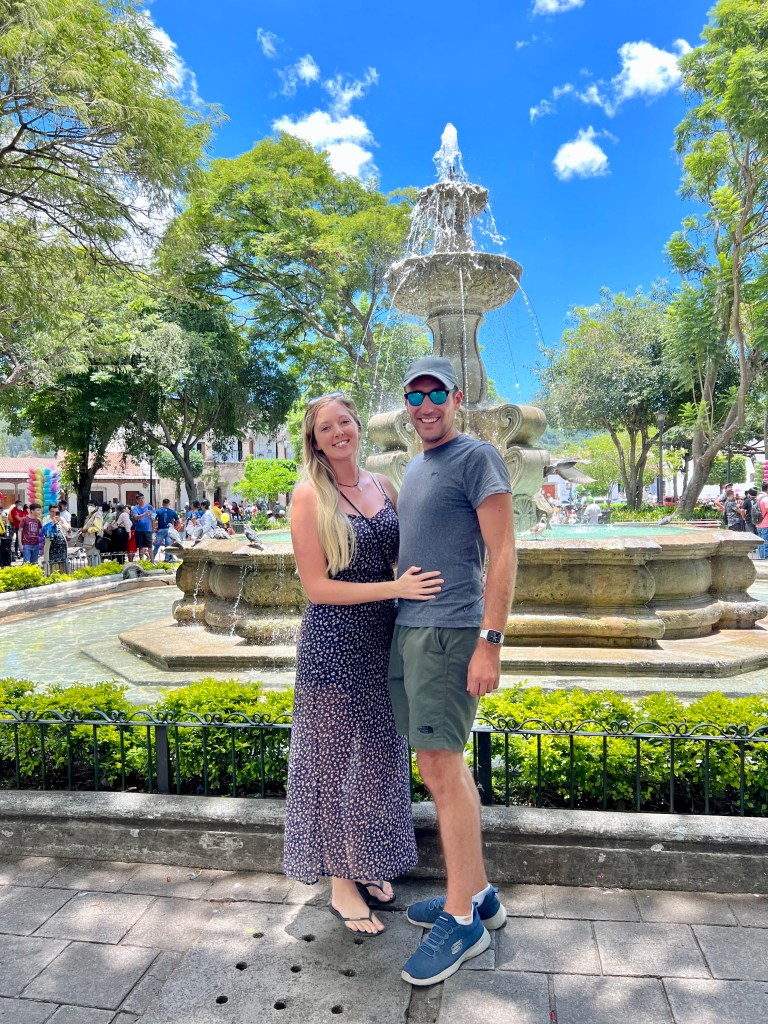
In the park’s centre is Las Sirenas Fountain: the mermaid fountain.
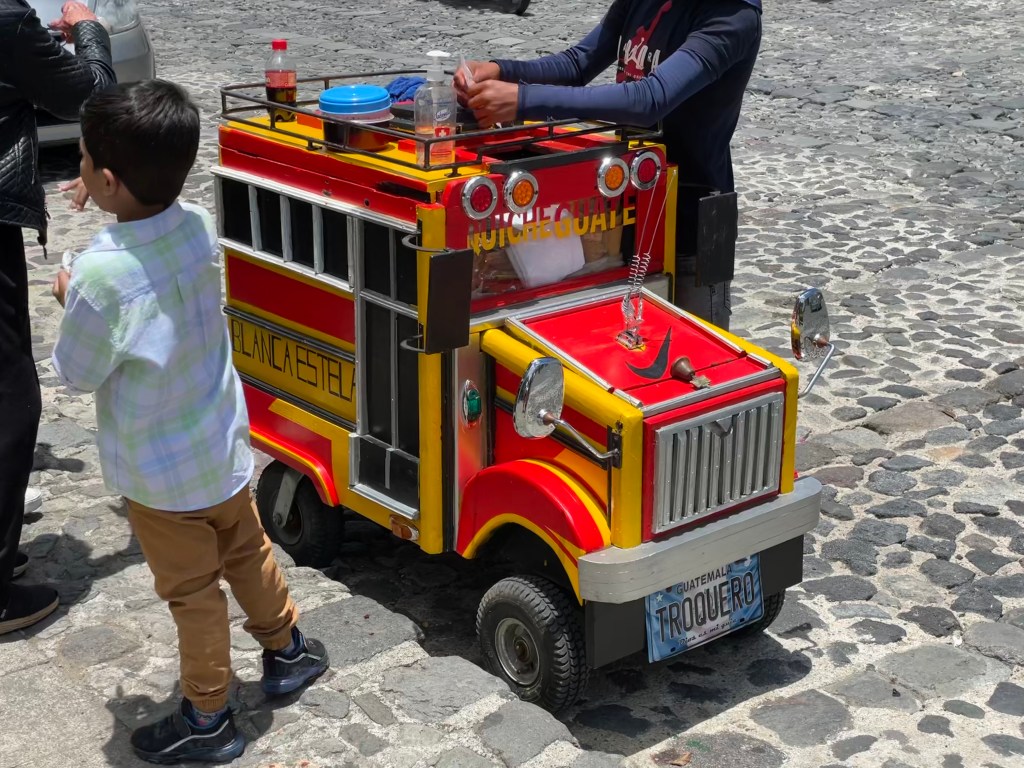
Around the city the street vendors serve food and drink out of little model chicken buses, how sweet.
There was a band playing in the centre with the most popular instrument in Guatemala: the marimba, a large wooden xylophone. There were many locals dancing together in couples. There was also a bustling market on as it was Sunday, so Leon treated us to a bottle of local hibiscus wine: vino de Jamaica. Which we later enjoyed on our balcony at the hostel.
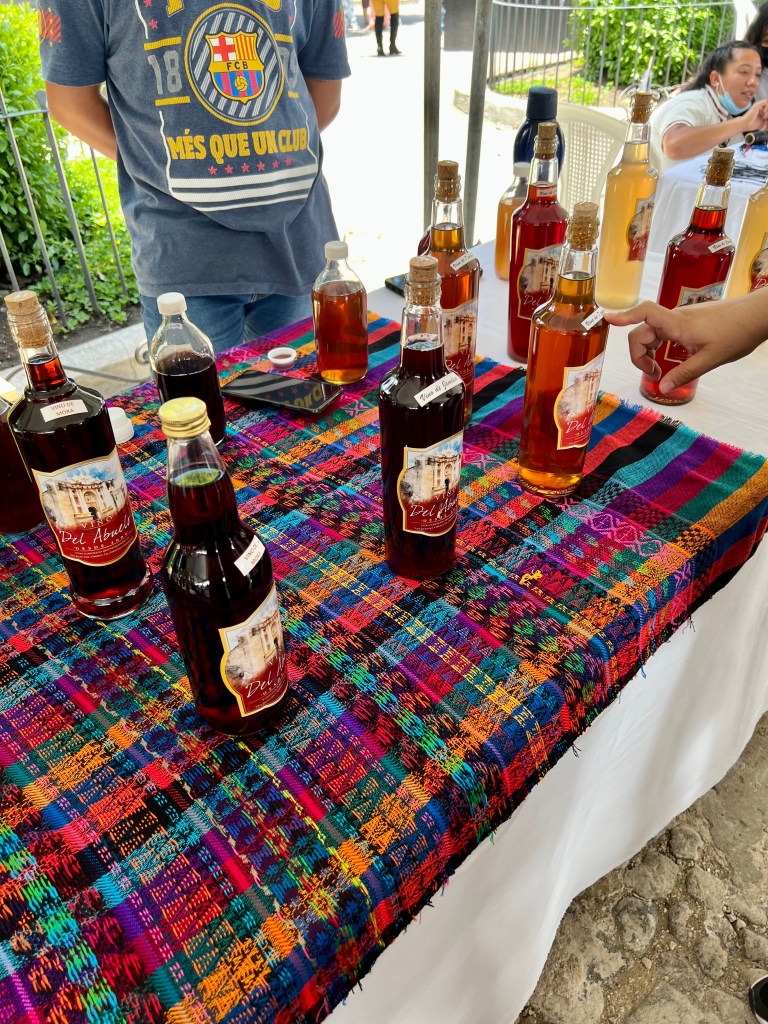
There were countless stalls with homemade crafts, jewellery, and chocolate. Did you know that Guatemala is touted as the original birthplace of chocolate? This is because it housed the capital of the Mayan civilisation. Though tasting very different from today, the “food of the Gods” was initially consumed as a spicy, bitter drink. Cacao provided medicinal effects and was used in religious ceremonies and was also used as form of currency.
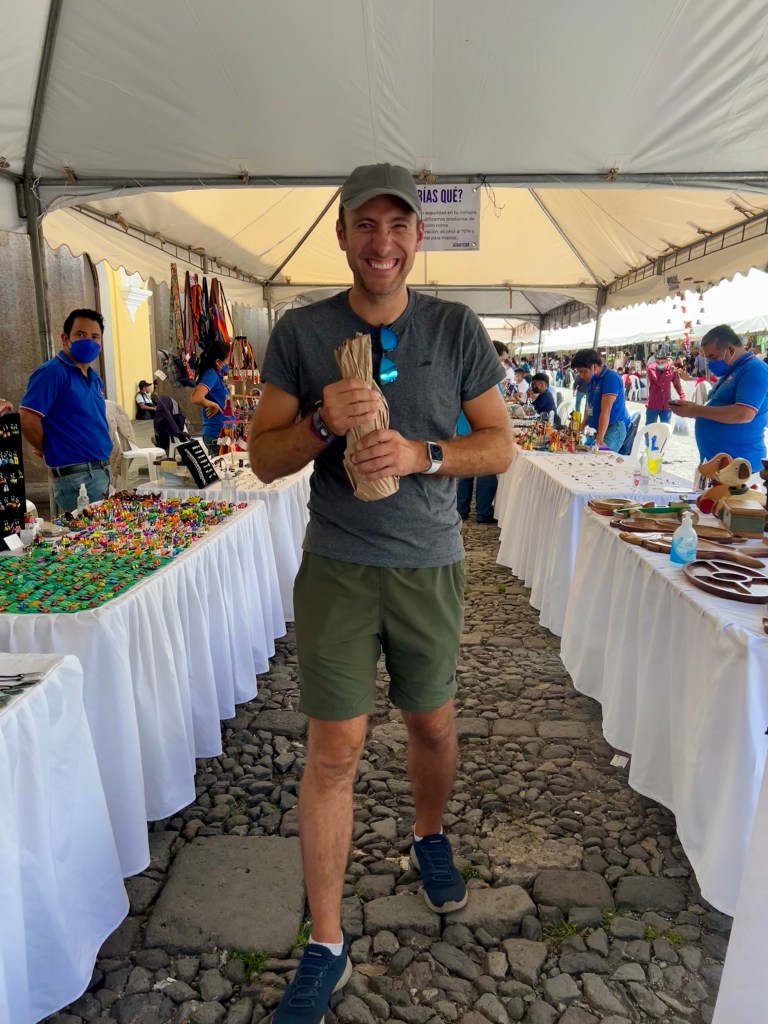
Fun Facts:
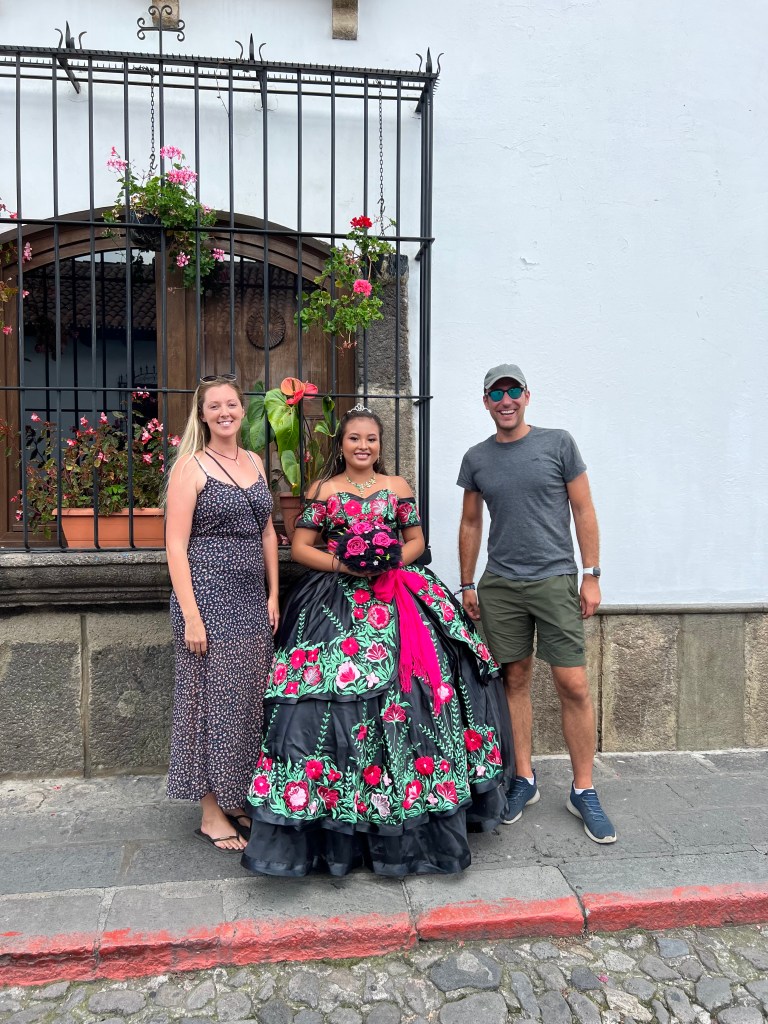
- In Guatemala, turning 15 is an important milestone in a girl’s life: part birthday party and part rite of passage, it symbolizes a girl’s coming into adulthood.
- We saw a girl celebrating her quinceañera, she was more than happy to have a photo with us.
- Think big dresses, cake, music, dancing, yummy food – similar to the American’s “sweet 16”.
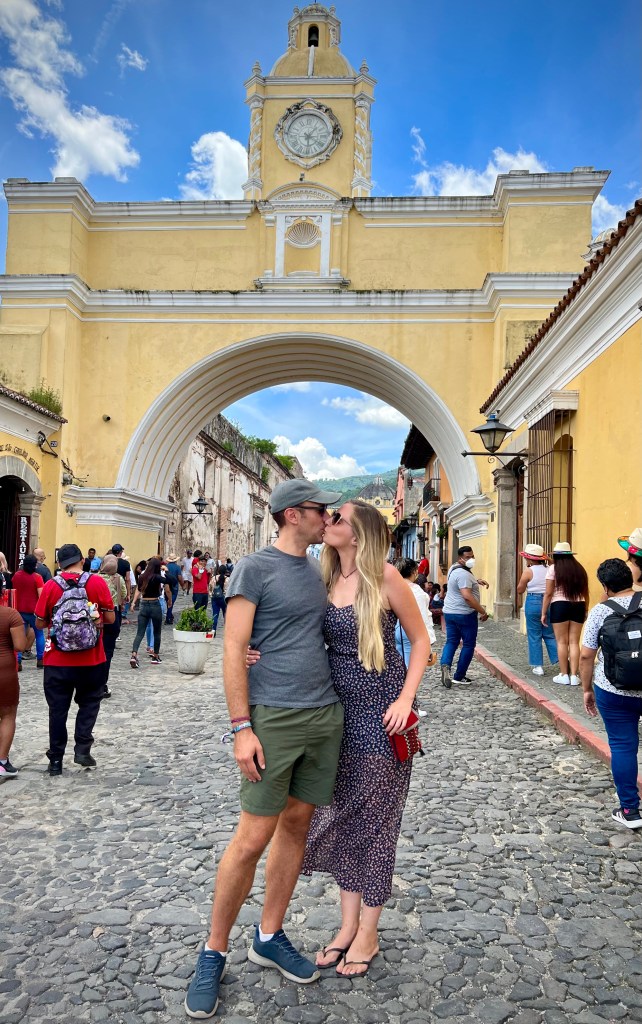
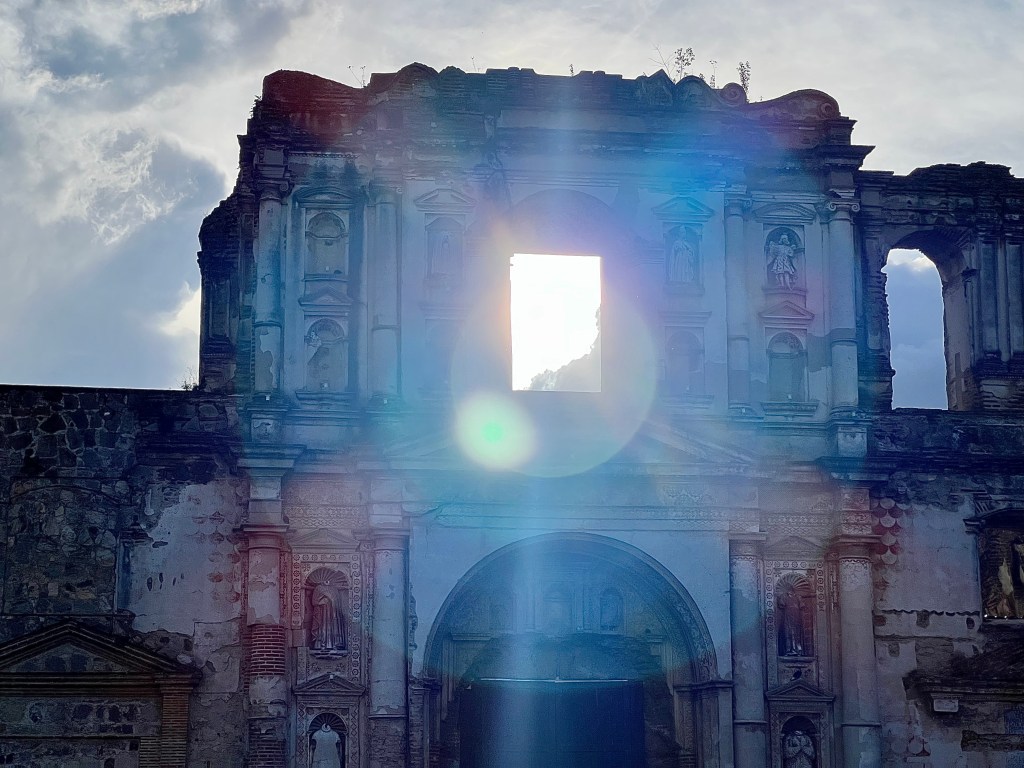
Pictured below is the famous yellow clock tower over Santa Catalina Arch.
The city has been challenged in the past by many volcanic eruptions, as Guatemala is on the “ring of fire”. This is a horse-shoe shaped region around much of the rim of the Pacific Ocean where many of the world’s volcanic eruptions and earthquakes occur.
This makes Antigua the perfect jump off point for challenging volcano climbs. We were very keen to climb Volcano Acatenango, one of Guatemala’s most famous attractions. There are not many places in this world where you can see a volcano erupt and spew lava, so we jumped at the chance. The challenging 2 day hike is not for the faint of heart.

Volcano Acatenango Hike
We were up at 6.30am, packing our bags ready for the 2 day hike. We headed over to Wicho & Charlie’s (our chosen company) and greeted with energy shots (I could have drank them all!), a delicious breakfast, and to meet our fellow hikers. The sun was beating down, but we were in good spirits and very motivated. We got a bus out of the city and to the starting line of the climb.

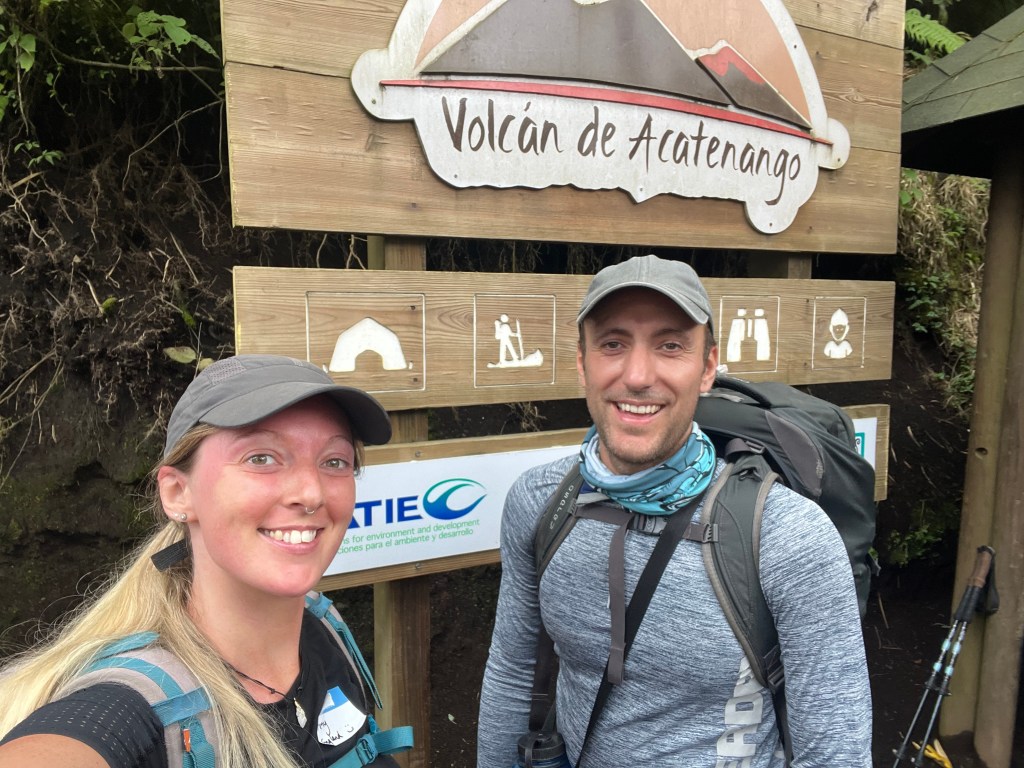
It was an intense hike right from the get go, but with breaks every 20 minutes it was manageable. We had to carry 4L of water with us as well as our food, and with the hot humid heat this was certainly not an easy climb. After 1 hour, we had made it only to the official entrance. As you can tell from my face, it was tough going. Though funnily enough, Leon barely looks like he broke a sweat.
It was a 4 hour hike through various terrain to base camp. Naturally our huge group of 20 climbers broke up into smaller groups, depending on fitness. We were in the middle, averagely paced group.
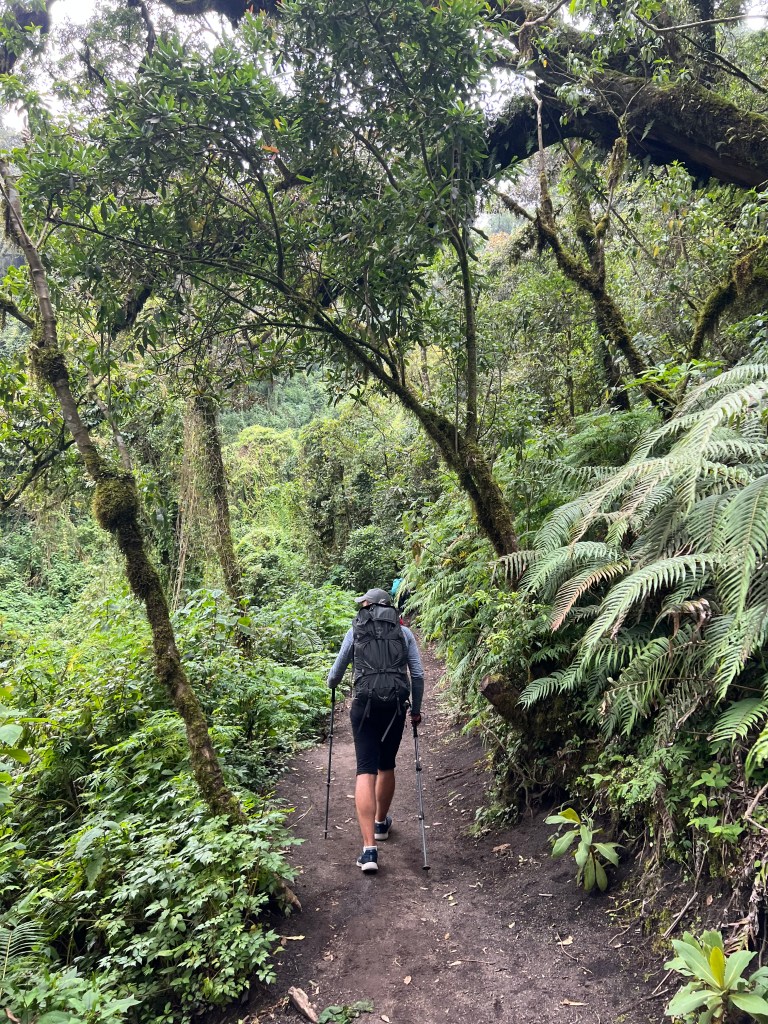
The walking poles we hired were absolutely essential considering the state of our shoes which after 7 months had no more grip left, a wise choice. After 4 hours we finally made it to camp, absolutely exhausted. We were met with nothing but a cloudy view.

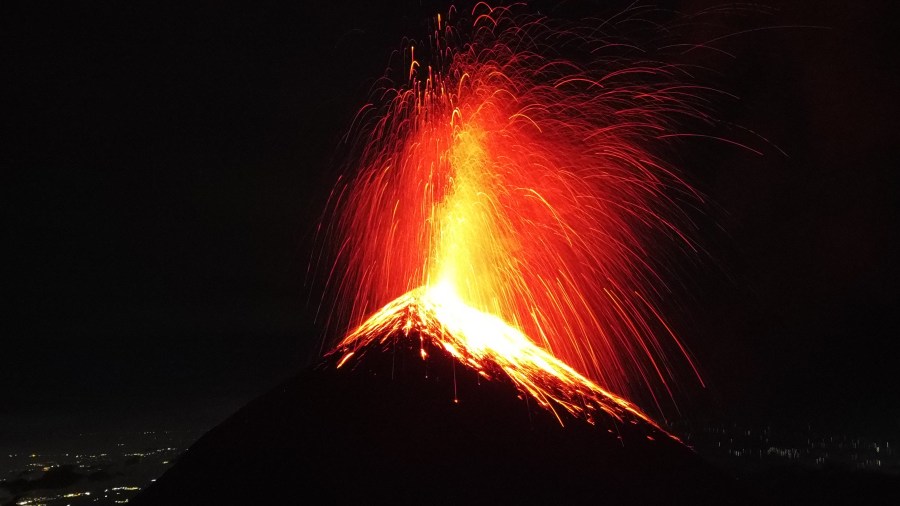
Volcano Acatenango is joined with Volcano Fuego (3763m), which has erupted like clockwork around every 15 minutes since 2002. Despite the fact we couldn’t actually see Fuego, we could certainly hear the booming eruptions rippling through our bodies. Every so often, we would witness a huge ash smoky ash cloud above the clouds. It was incredibly exciting and intimidating.
There is an option to do an additional hike, to get up close and personal with Fuego and get closer to the lava. Though due to clouds, the guides were not sure if we would be able to do the additional hike. The clouds were constantly teasing us – showing us little glimpses of Fuego, like pieces of a puzzle.
A couple of hours went by, we sat in camp, chatted, and drank hot chocolate. Then the clouds started to clear, we could saw Fuego in all his glory, and suddenly it was a huge rush to get changed and take off the many layers we had put on ready for the hike.
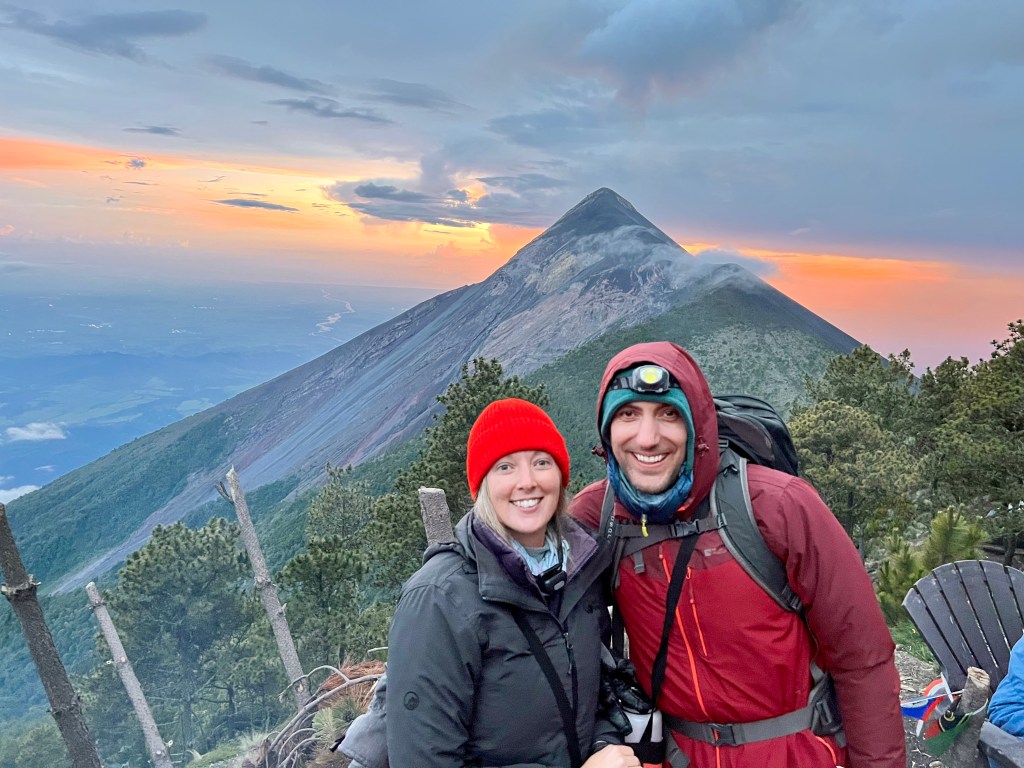
About half the group decided to do the climb, the other half were too fatigued. I was incredibly tired but nothing was going to stop me getting up close to lava. Having climbed an active volcano in Chile and saw lava, I knew this was an experience I did not want to miss out on.
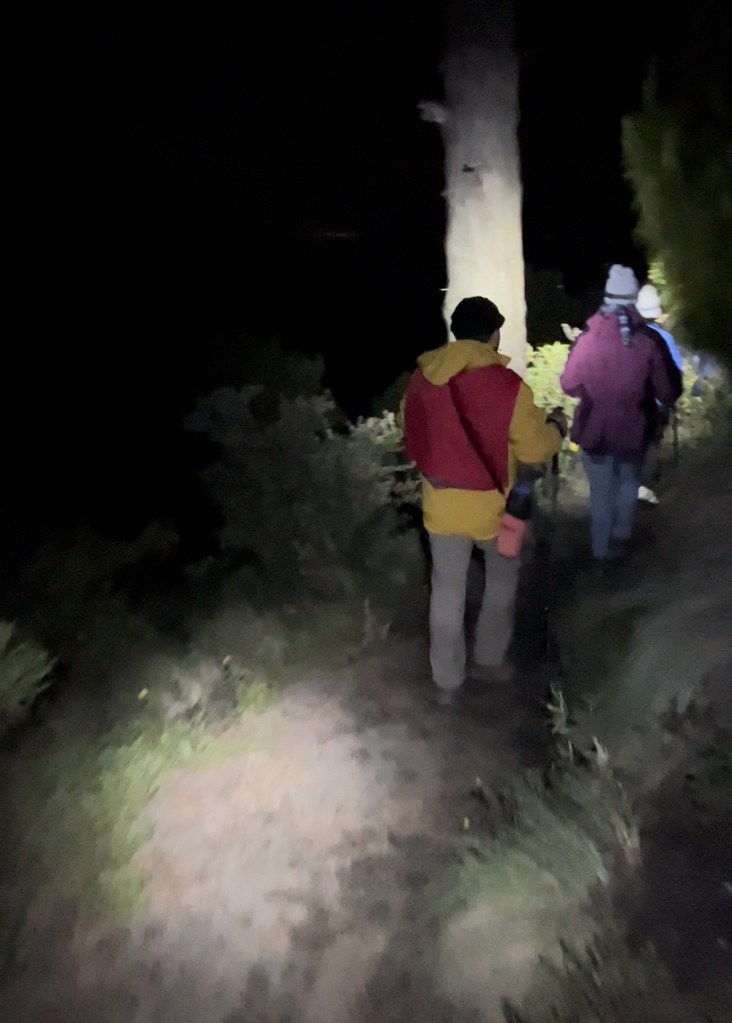
Armed with head torches, about 10 of us left base camp at 6pm and headed down Acatenango and up Fuego as the sun was setting. As the darkness set in, the lava explosions became more and more obvious to see. Watching Fuego volcano erupt over and over again was an experience like no other. Probably the most amazing thing I’ve ever laid eyes on. Every so often, we would stop for a few seconds and shout “WOWWW!” as the lava would spew violently out Fuego.
You may recall my hiking boots are now living out a new life somewhere in the Philippines. This left me hiking in my Skechers. It was fall, after fall, after fall. They had as much grip as a wet bar of soap. Sometimes I was ankle deep in dirt, my socks full of dirt. It was a gruelling hike, but we finally made it to our view point on Fuego, and the 10 of us sat down together in the cold, and just absorbed every second of the most incredible show on earth.
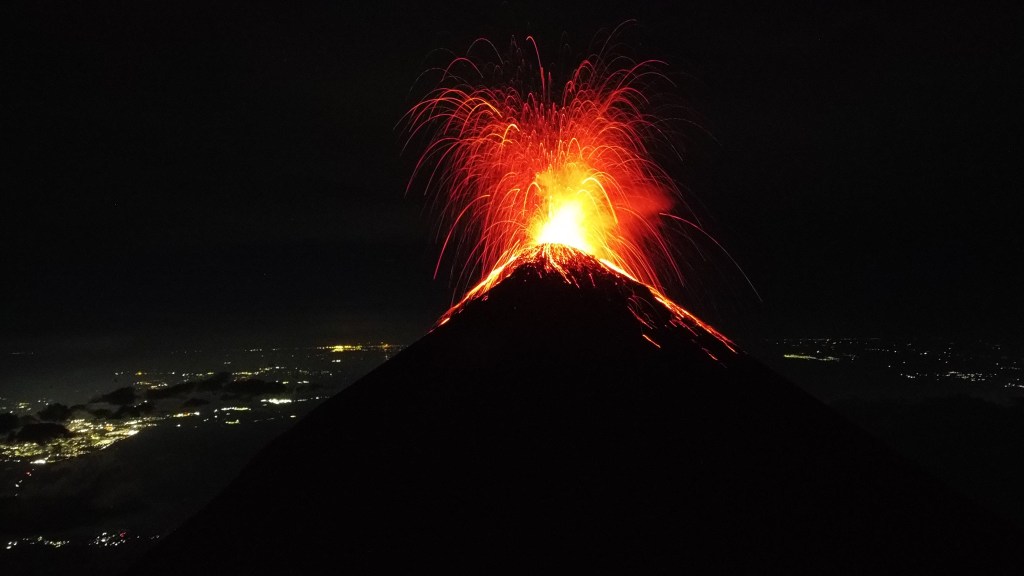
On the left of us, the view of the distant cities below and surrounding volcanos was spectacular. There was a thunderstorm in the distance, and every few seconds we saw the sky light up. It felt like we were on top of the world.
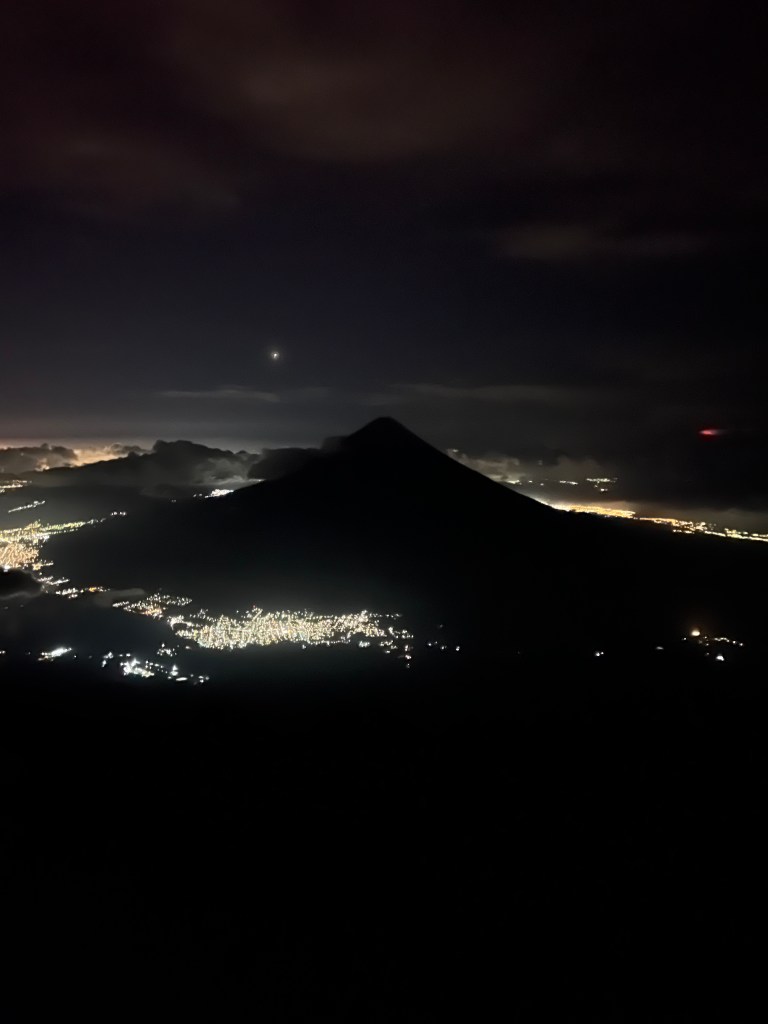
Leon was brave enough to fly Percy closer to Fuego and its lava. We were nervous about flying him in risky conditions, but it was a huge success and the group cheered when Percy made it back to the group safely. We sat and watched the eruptions for about 30 minutes, my hands were turning numb as it was so cold and windy.
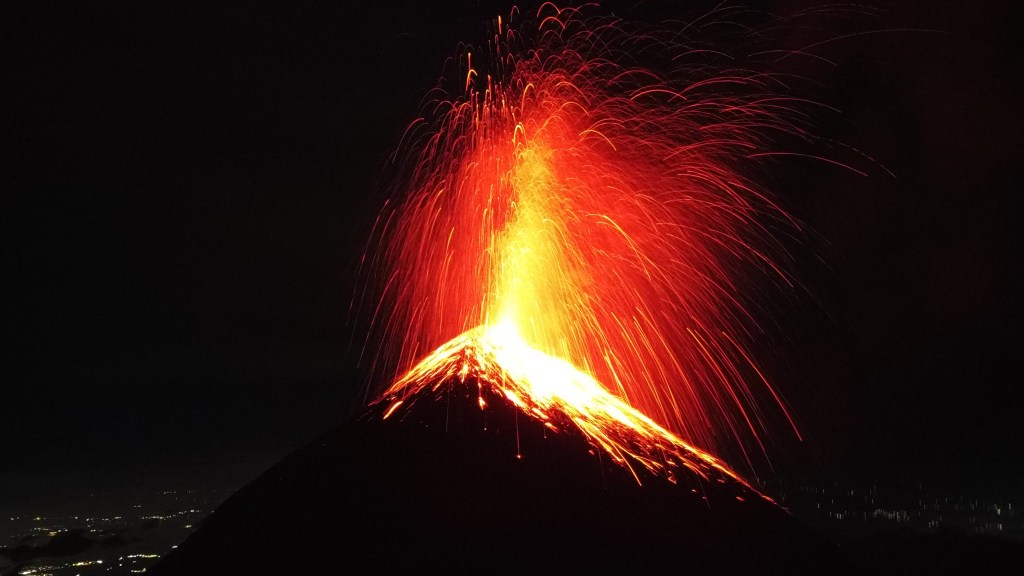
We started to climb back down Fuego. Leon’s head torch died so he couldn’t see a thing. Half way down, he borrowed another head torch from somebody else in our group, but within 5 minutes that also died.
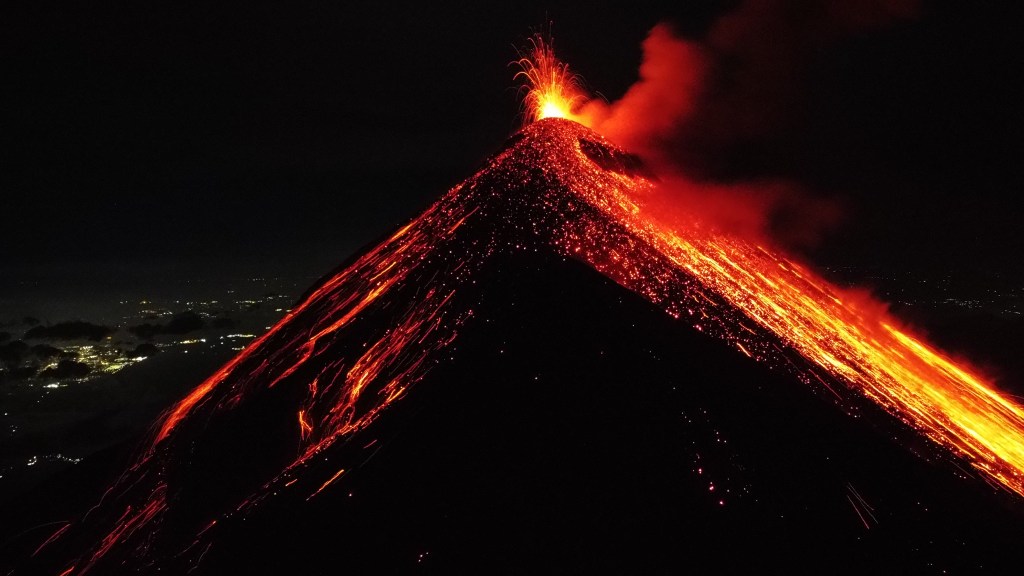
Climbing back down Fuego and up to base camp on Acatenango in the pitch black was gruelling. Much harder than the initial hike. The clouds were rolling in and even with my torch, I could only see 1 meter in front of me, the cold swirling mist obstructing the view. We were stopping every minute to catch our breath, the high altitude slowing us down. Our guide was hanging back with the slowest girl, so we weren’t really sure which pathway to take but we just hopefully headed up, desperate to get back.
We FINALLY made it back at midnight, absolutely exhausted and feeling dizzy. I had some altitude sickness pills and forced down a little of the lentil stew dinner our guides had prepared. We quickly dived into bed with all our layers on and snuggled into our thermal sleeping bags, with teeth unbrushed. I tried desperately to sleep, but all I had was those trippy dreamy visuals you get at high altitudes. I couldn’t tell if I was asleep or awake. Continuously throughout the night the incredibly loud eruptions would rumble and shake the timber shack 8 of us were huddled in like sardines.
Half our shack woke up at 3.45am to do the optional sunrise hike – no, thank you. I stayed firmly in bed until 5.45am to watch the same sunrise at our camp. I have no idea if I actually slept, it certainly didn’t feel like it. I forced myself out of bed, it was absolutely freezing, I took one photo and then got back into bed.
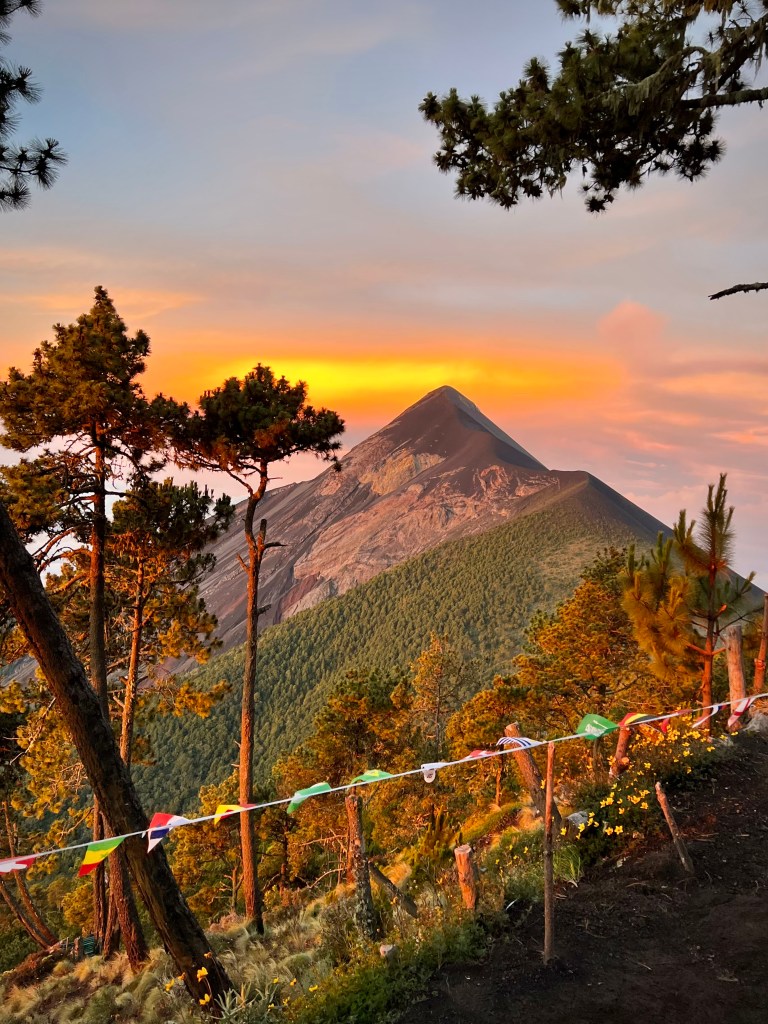
We all surfaced for our burrito and black tea breakfast, and a group photo at 6.30am.

We were so tired and cold; it was 7am when we began the long and painful trip down.
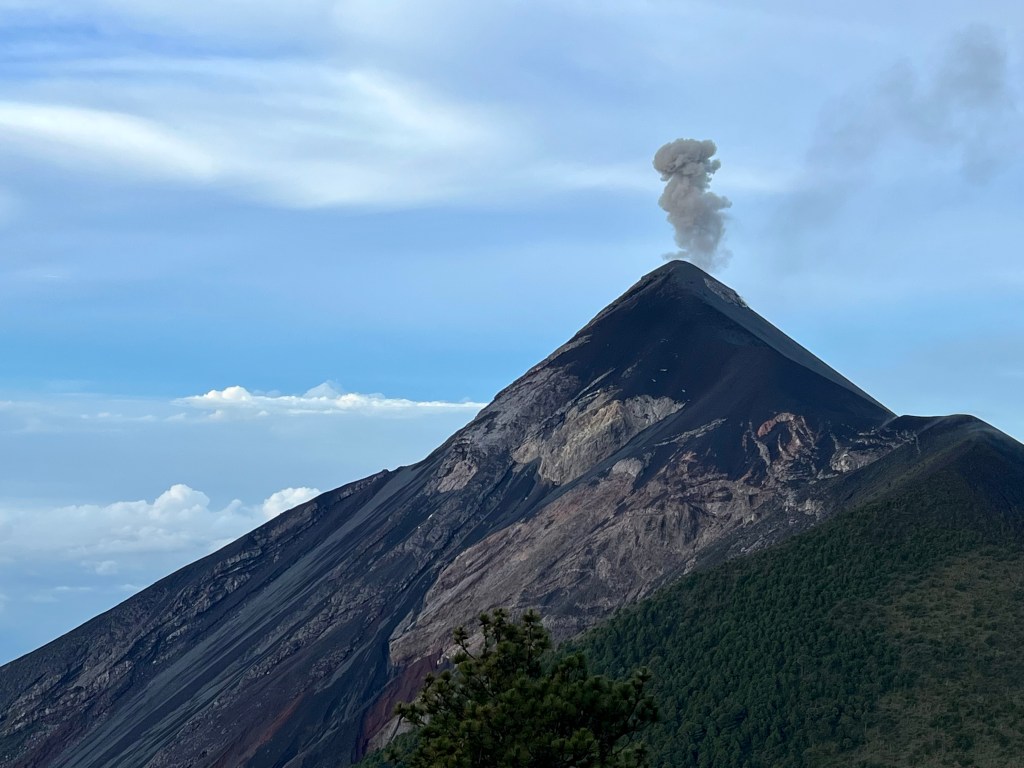
My sketchers had tore huge blisters into both of my big toes. My left knee was hurting, as I had twisted it during one of the many falls. Every step was painful.
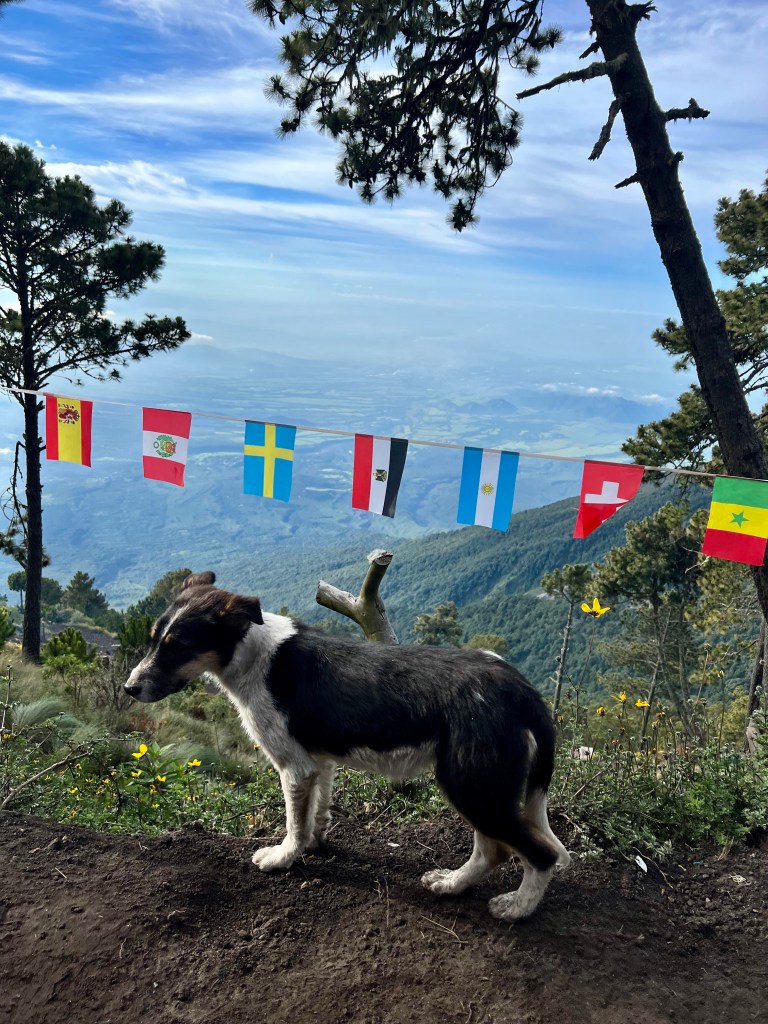
But the views were pretty special, so it was worth it.
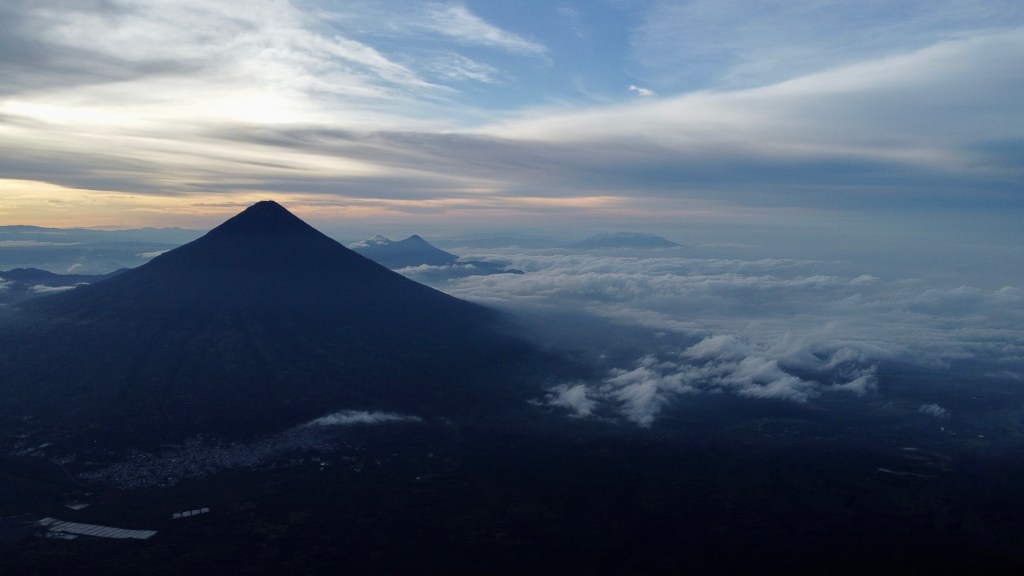
Leon’s shoes had no way of tightening the elasticated laces so his feet would slide forward every step down, putting all the weight through the toes and toenails, so for the last few kilometres he walked backwards (which worked very well for him, but not for me).
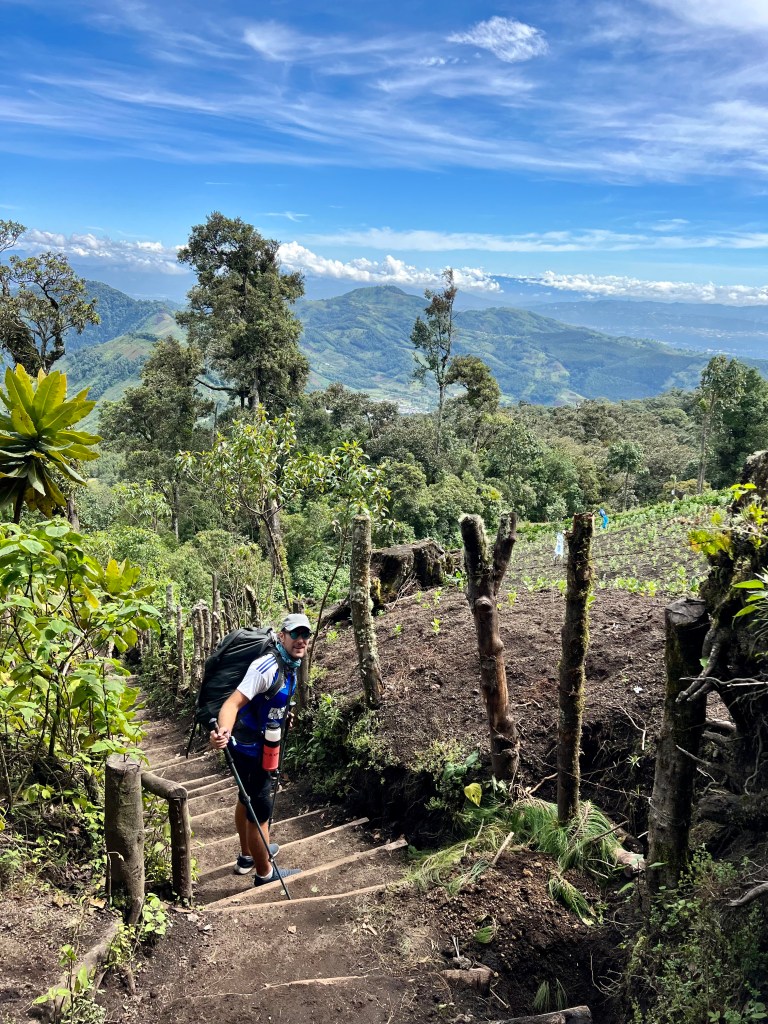
We were both hobbling down in agony for hours, it was such a relief when we finally made it down to the bottom on flat ground. We celebrated our victory with an ice cold can of coke. The fast group, in their ankle supporting hiking boots had already made it, but that just meant me and Leon got a clap when we finished.
Am I glad I did it? Hell yes! Would I do it again? Absolutely not.
The day after, we bussed and the boated to our next stop, Lake Atitlán.
Lake Atitlán
Lake Atitlán is a body of water in a huge volcanic crater in the southwestern highlands in Guatemala. The lake is ringed by volcanos and little villages, each village offering a different vibe.
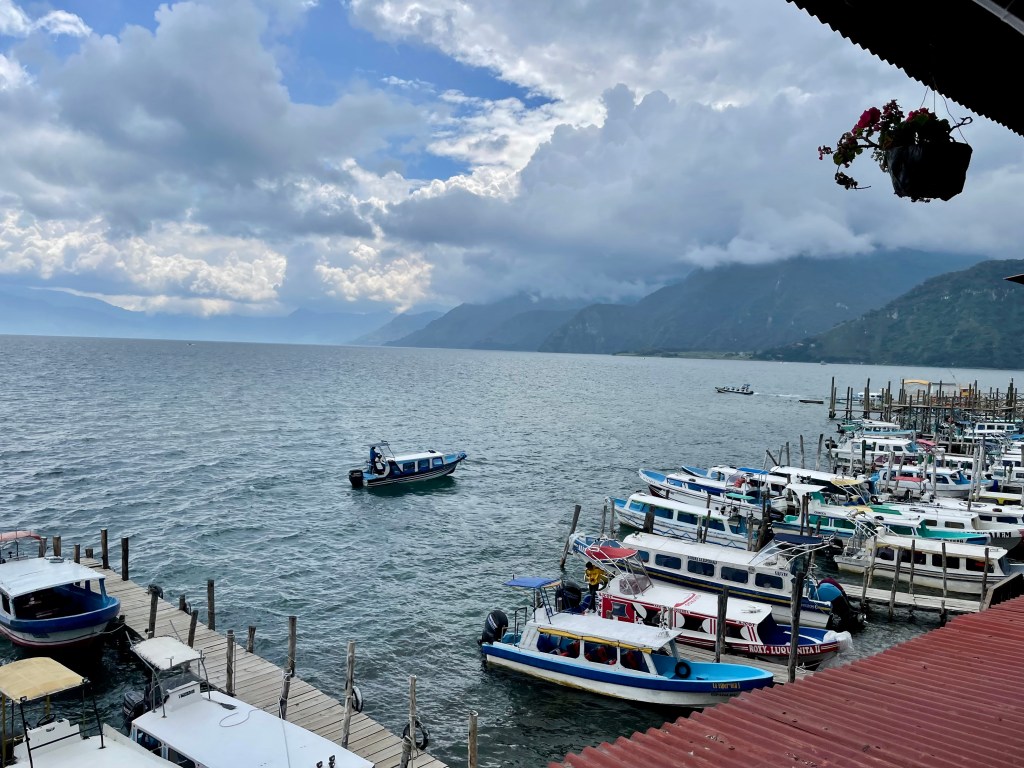
We spent two nights at San Pedro, known for it’s laidback atmosphere and nightlife.
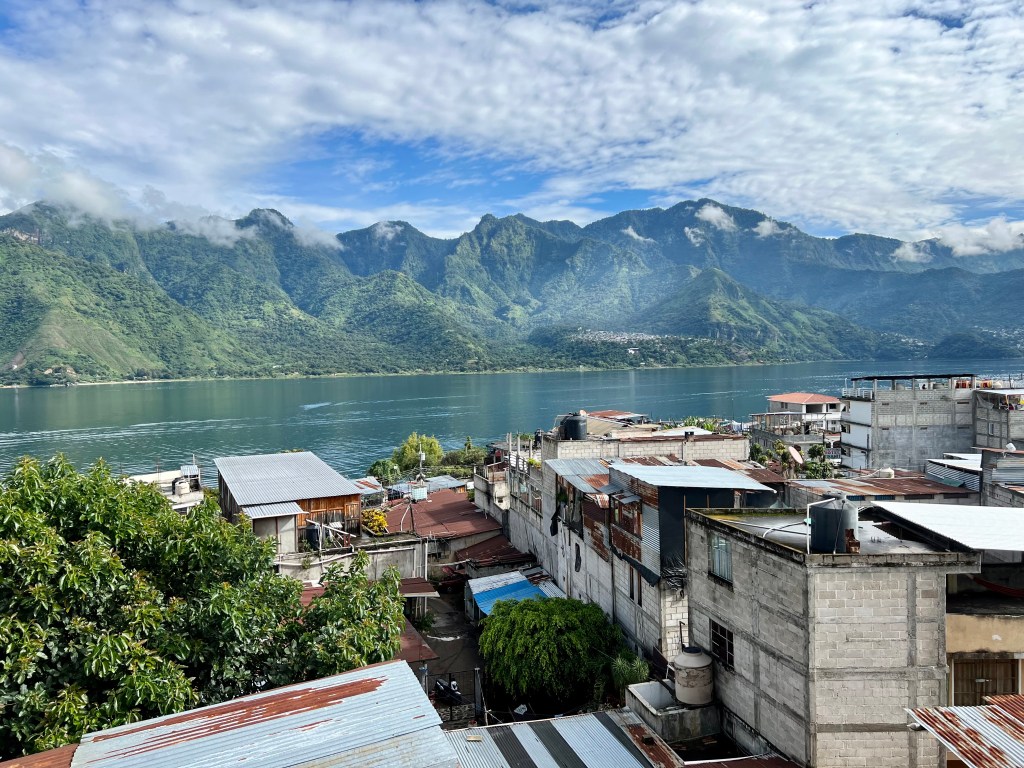
There are a few hikes here on offer which you can do, but our toes were covered in blisters, so hiking was the last thing we wanted to do. We had little interest doing anything bar relaxing, eating, and life admin.
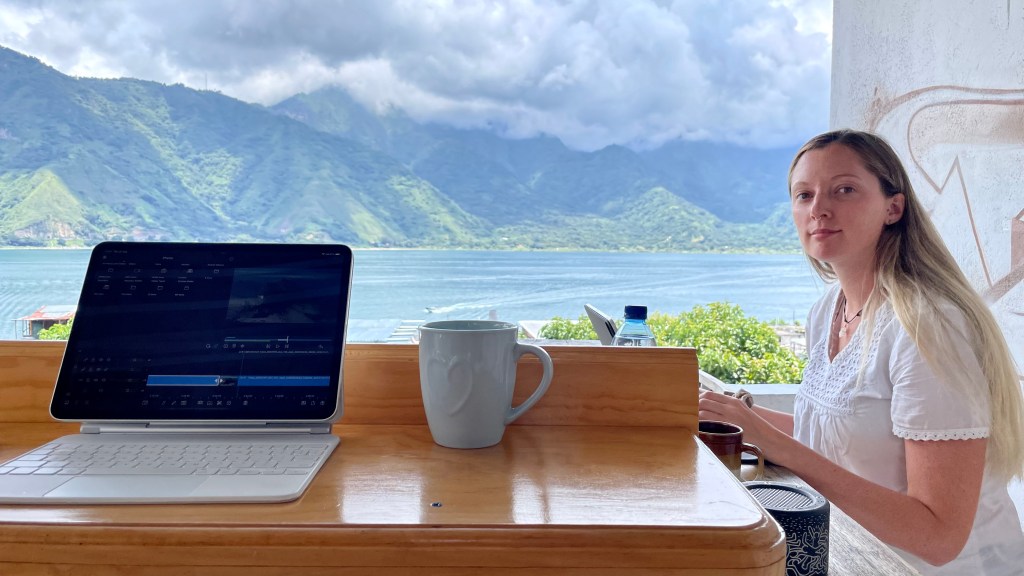
The lake was very pretty and we found some delicious food here.
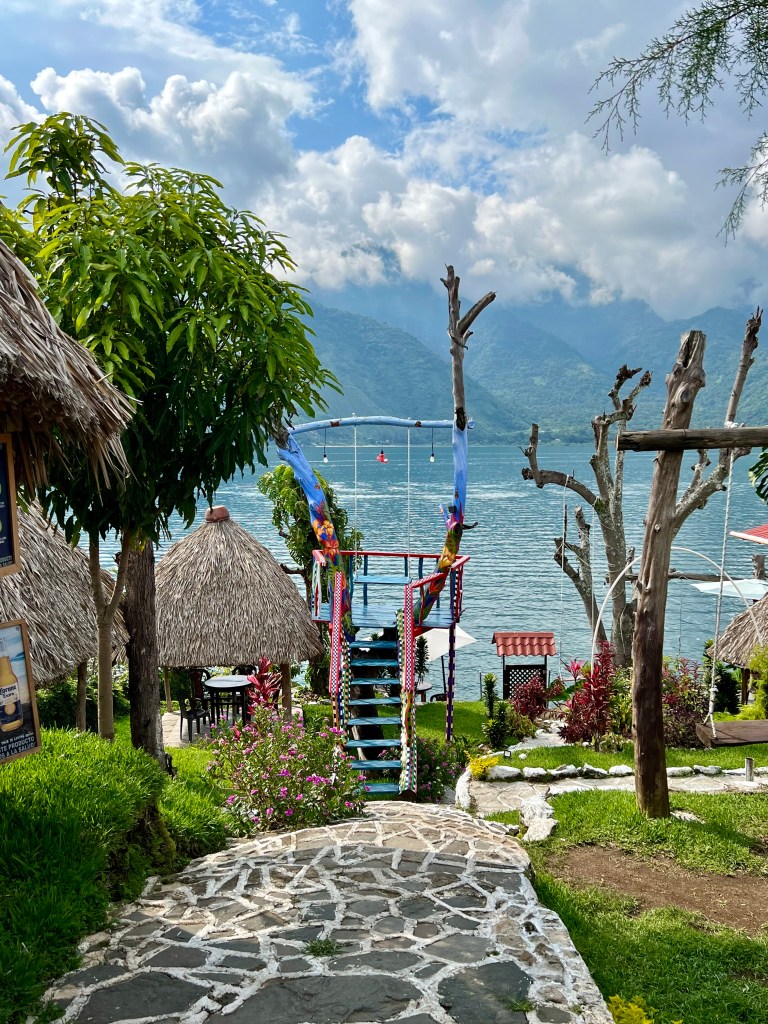
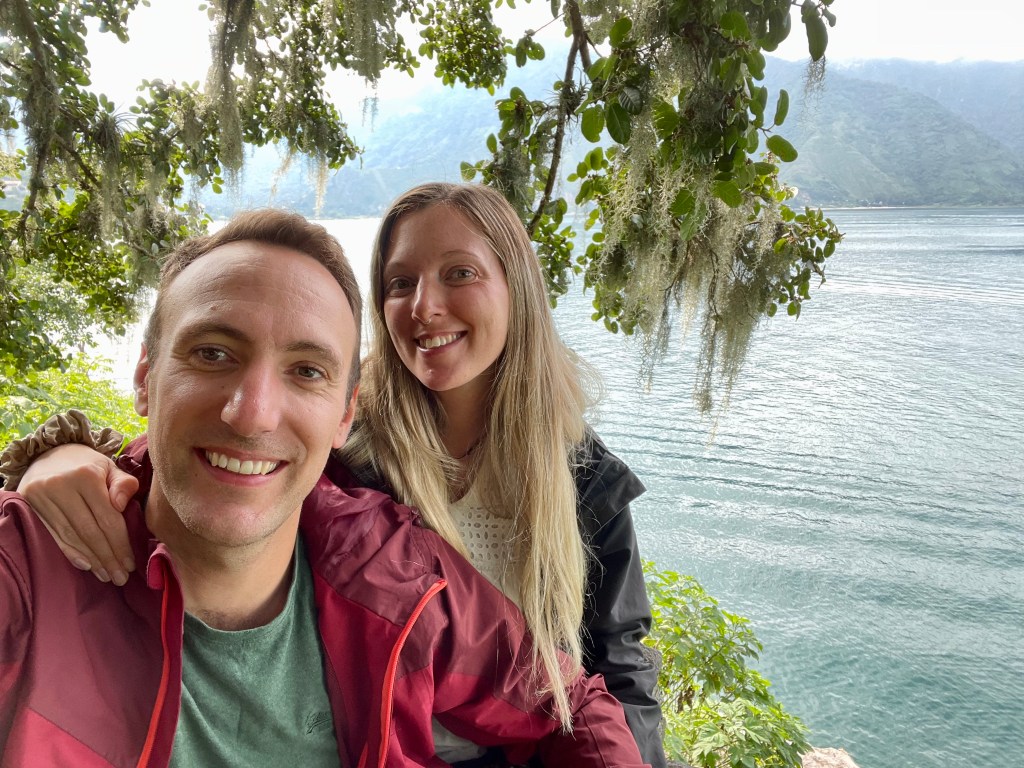
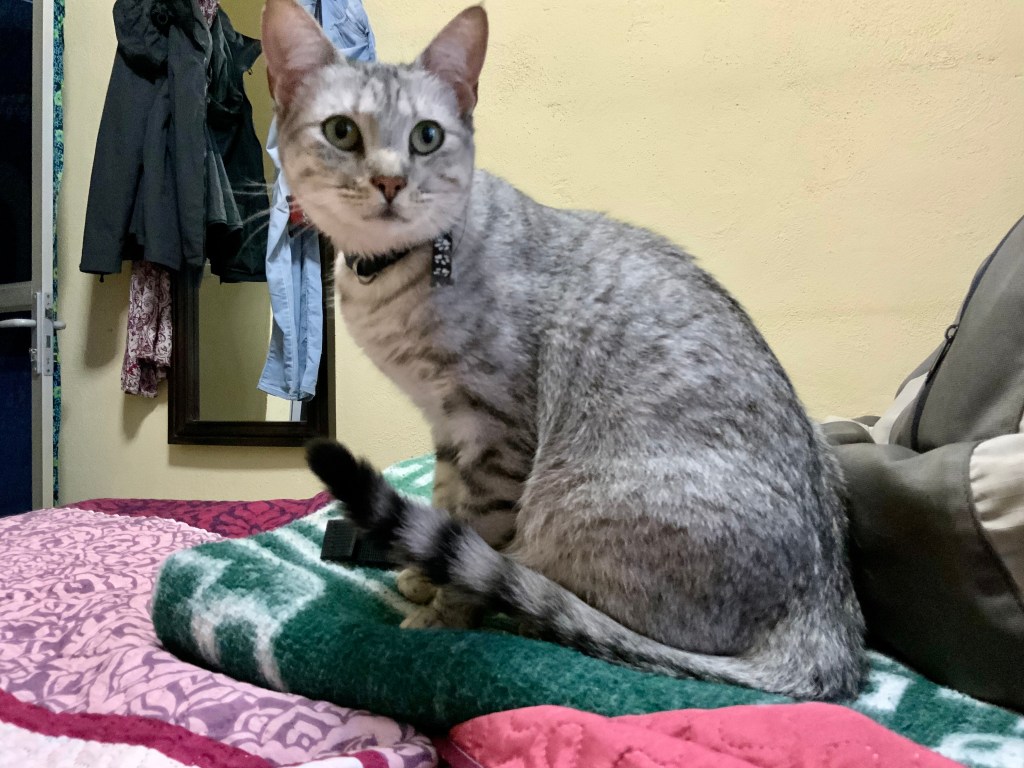
We stayed at Mandala Hostel, which had a cute resident kitty who was very friendly and joined us for some Netflix.
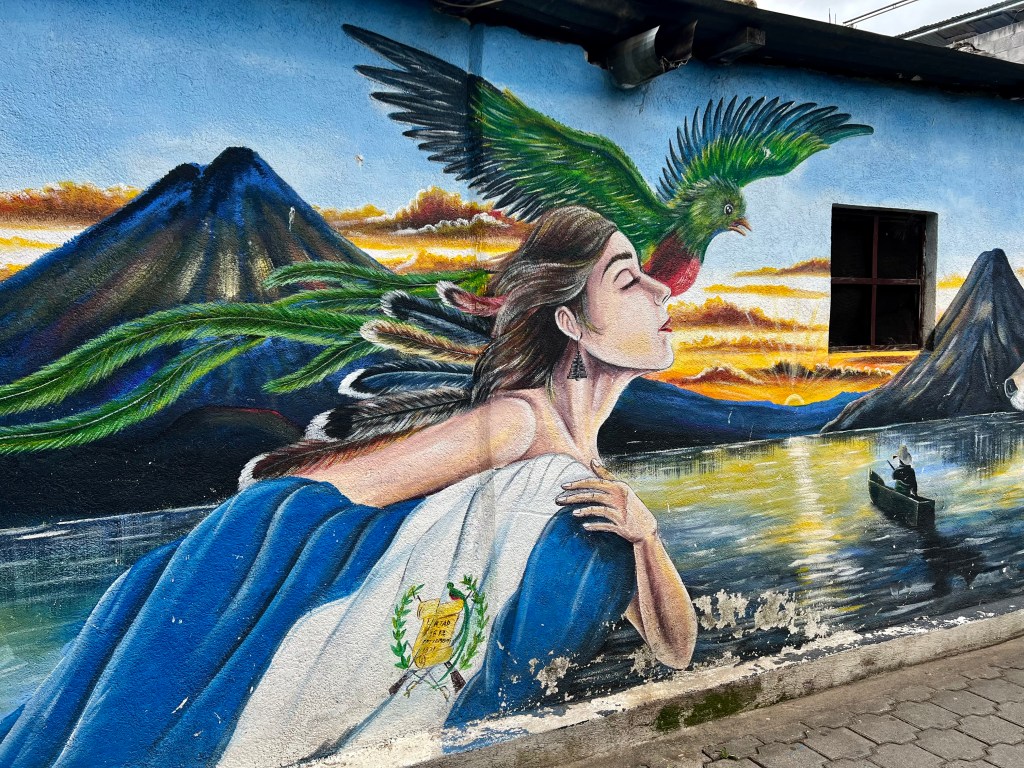
We did do some walking around San Pedro. We came across some great street art, this one picturing the green quetzal bird, which is the national bird of Guatemala.
After our blisters healed, we left very early in the morning to get a bus north to our next destination, Semuc Champey.
Lanquín – Semuc Champey
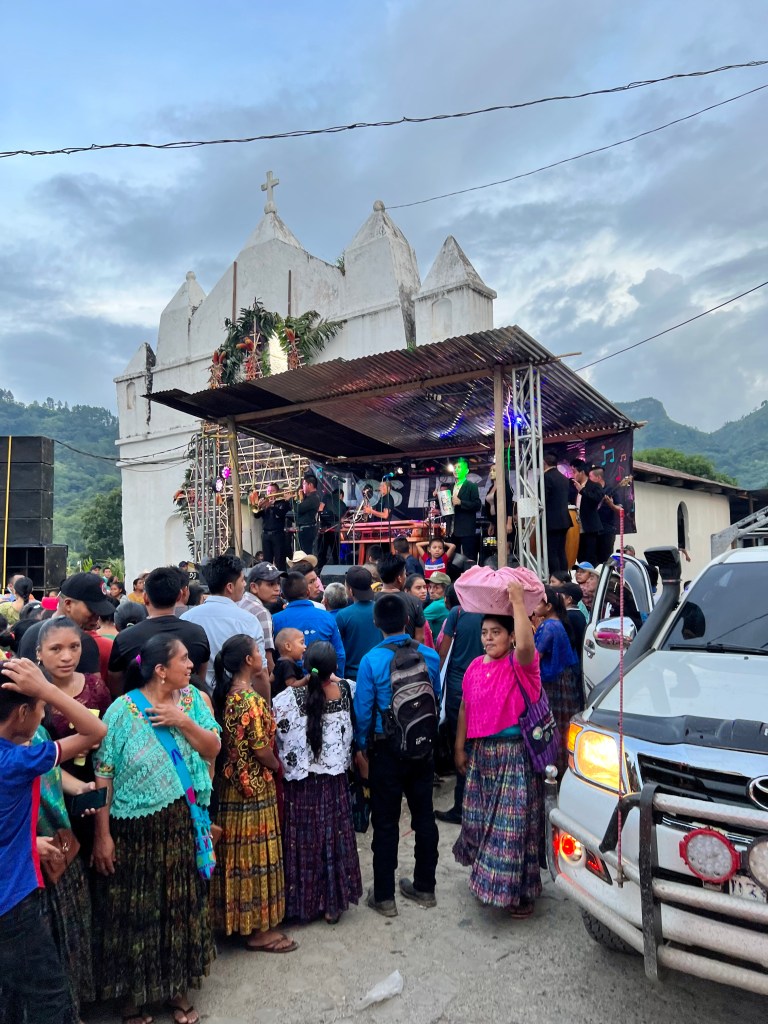
It was a long bumpy bus ride to get to the middle of nowhere. We got dropped off at Lanquín, a small rural village. There was a celebration on that afternoon, it was the anniversary of the village. So we jumped out and toured around the festivities. Never have I ever felt like such a giant. Guatemalan’s are pretty short, us foreigners we were towering over them. We were getting a lot of stares, but also a lot of smiles… so we didn’t mind too much.
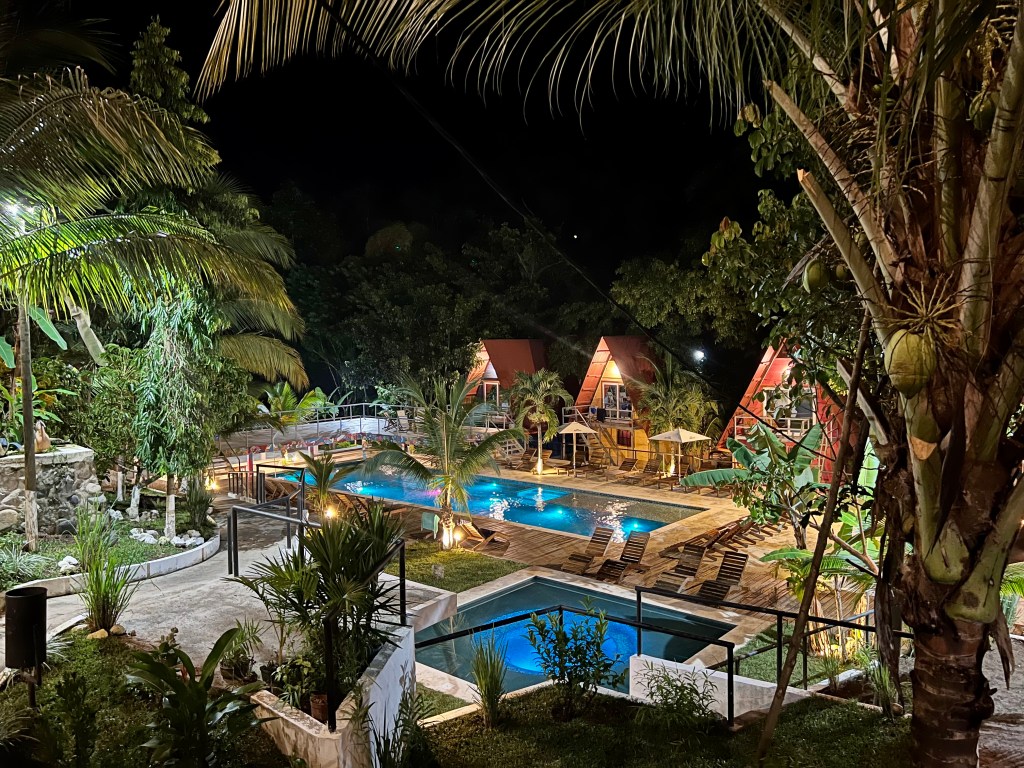
The next step was the jeep ride through the jungle to get to our hostel was about an hour. No way could a normal car have managed the journey, this was 4×4 territory. We were surrounded by pitch black, apart from a neon blue light which ran through the centre of the jeep. We stayed at Greengo’s Hostel; the Israeli owner was quite the character. He had big plans for the hostel, which was probably the best I’ve ever seen. You are limited and do have to eat and drink there, as there are no shops or anything around for miles. People only come here for one reason, to visit Semuc Champey.
It wasn’t long after we arrived before Leon began to feel very unwell. That night, it became apparent what he was dealing with as his bowels were not in a good way at all. Of course, we were in rural Guatemala, in the arse end of nowhere in the jungle, the nearest village was an hour away. It was pretty bad, even two Imodiums couldn’t help Leon. I have never seen him so unwell.
Our insurance was rung, and the Israeli hostel owner called a local doctor from the nearest village. 30 minutes later, the local doctor came to our hut to see Leon. He had two gold front teeth, a brown scruffy stained adidas top, and some loose fitting jeans. Not necessarily what you think of when you think doctor. He had a small colourful knitted bag full of his basic medical supplies. He didn’t speak a word of English. He prodded and poked Leon, took his temp, then gave him a very painful injection on his bum cheek. “Called it”, Leon said. He knew this was coming.
“I helped built this hut”, he said in Spanish as he rubbed the walls of our wooden jungle hut. Part time doctor, part time builder. Fair enough. Guess this is Guatemala after all. The next morning at 7am the doctor came back to check on Leon, he was still rocking the same attire as the previous day, and equipped with the same bag of needles. He gave Leon a second injection in the other bum cheek and gave us a bill for 120Qs (£13.57 GBP). He recommended getting tests at a hospital at our next destination.
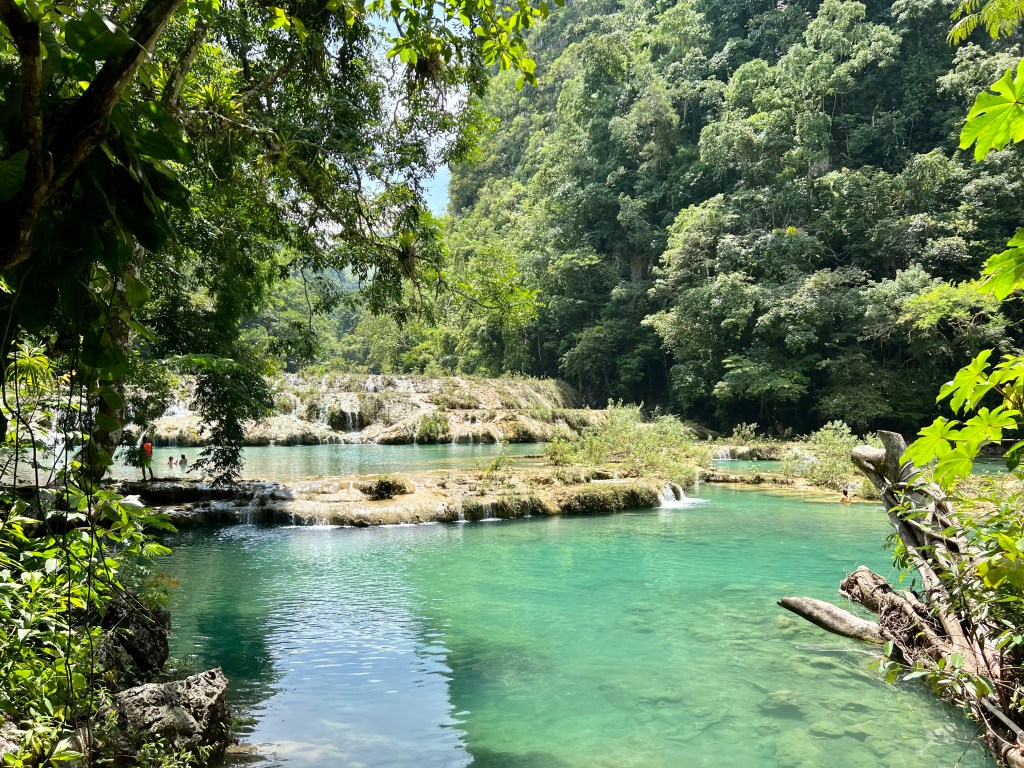
We did the short walk to Semuc Champey; a series of stepped, turquoise pools and popular swimming attraction. Leon was not able to swim, but I had a little paddle in one of the many pretty pools.
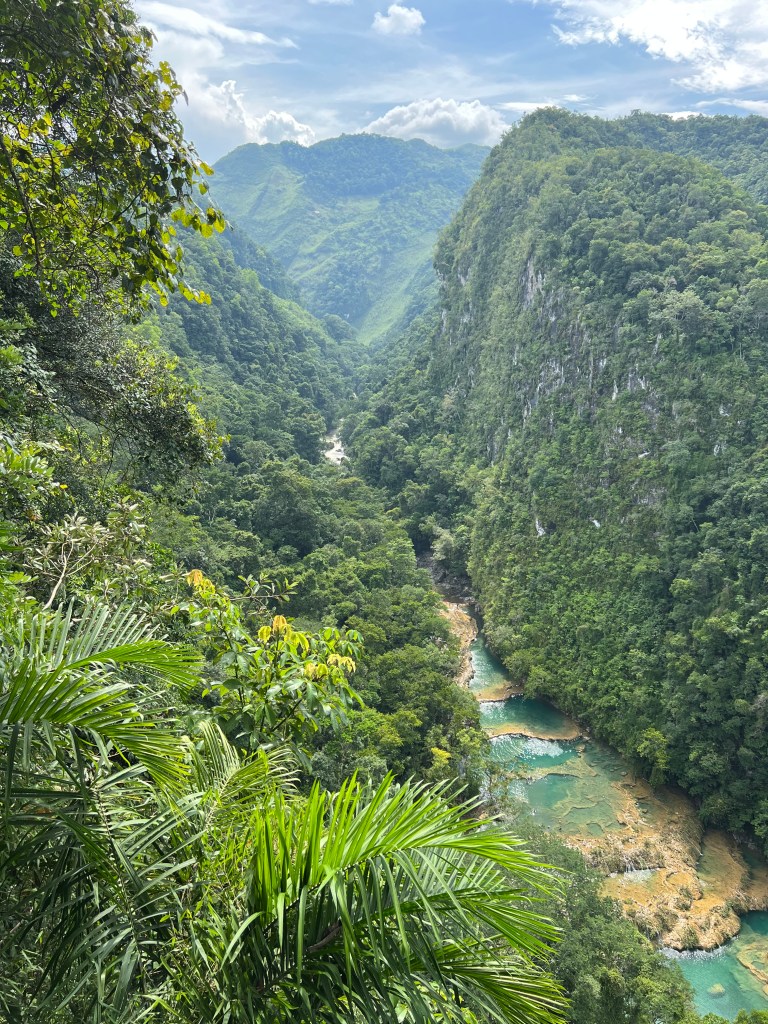
After a sweaty, slow, and slippery 45 minute climb up to the viewpoint, we were treated with this birds eye view.
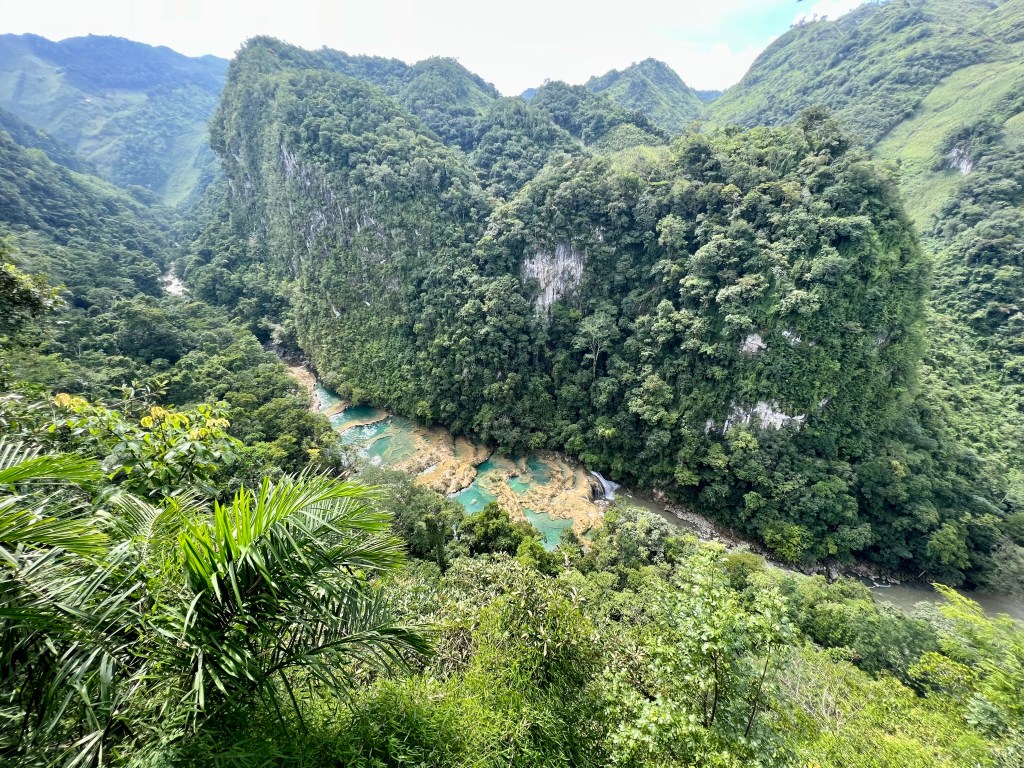
We spent the rest of our time resting, eating, and taking things easy. Poor Leon was feeling pretty rough.
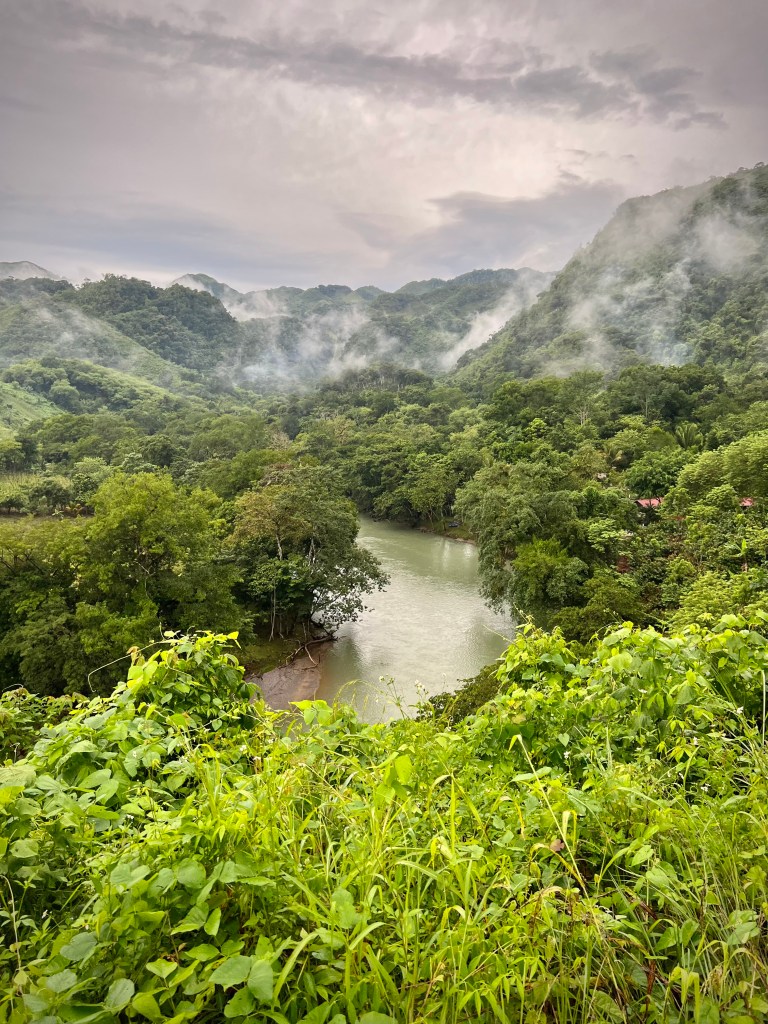
After three nights here, we got the jeep back to town, and the bus to our next stop, Flores.
Flores
The highlight of the journey was crossing a river on a tiny ferry on our way to Flores.
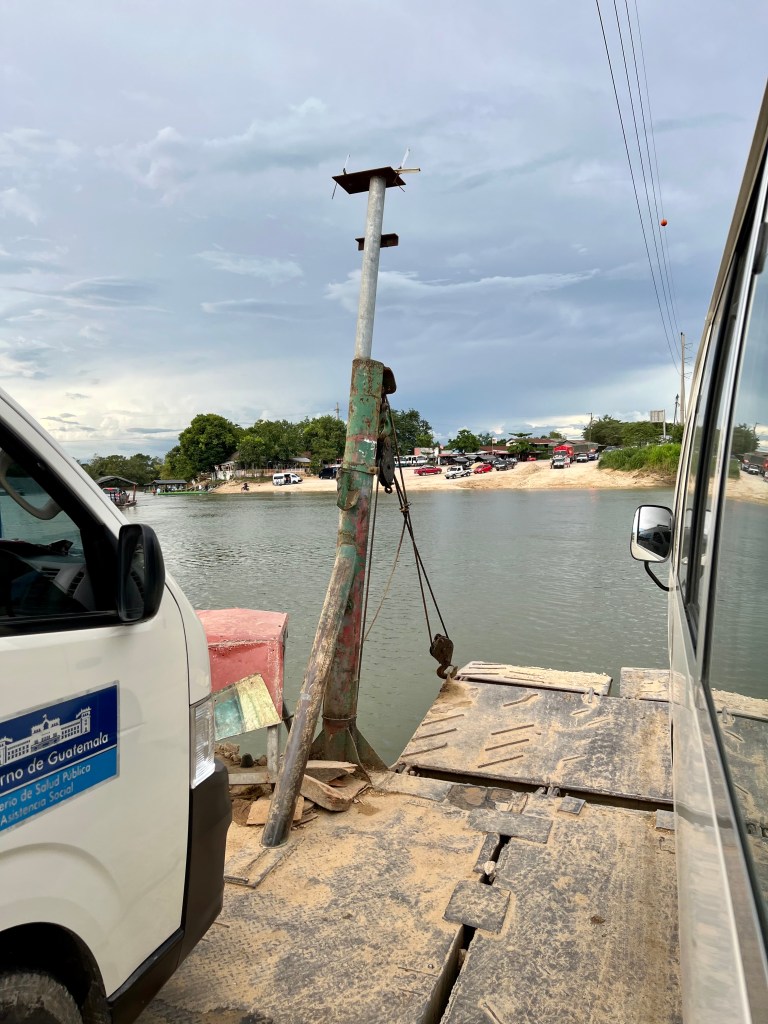
It was a very long wait to get on that little ferry though.
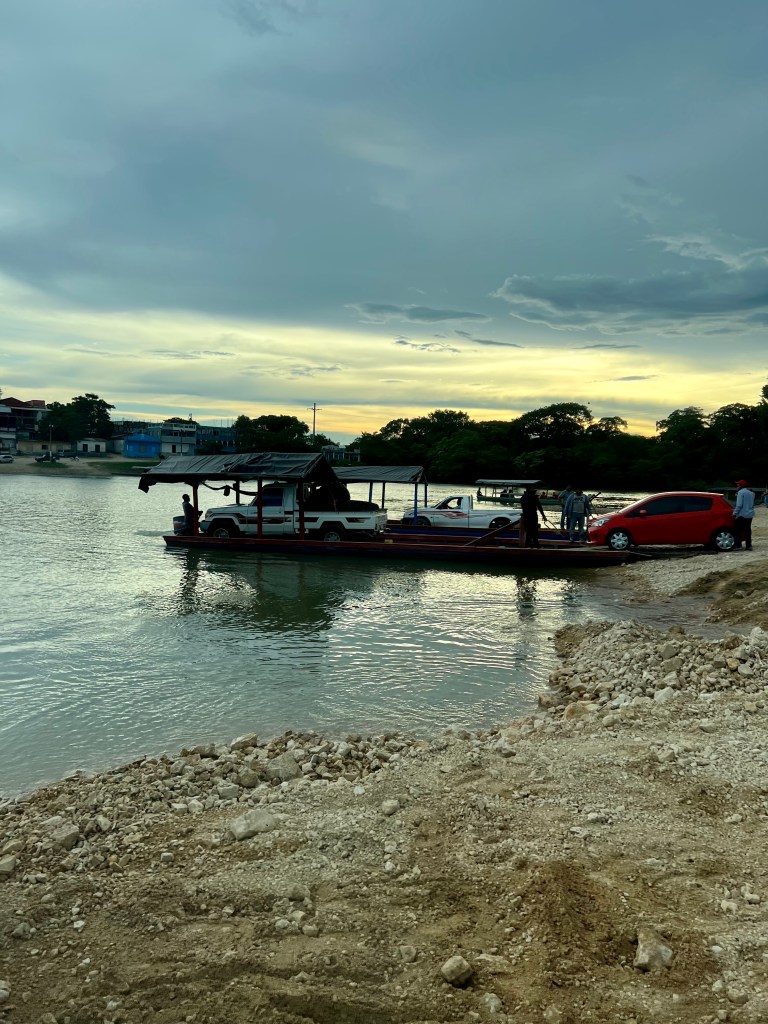
Flores is a picturesque town on a small island on Lake Peten Itza. Connected to the mainland by a short causeway; Flores is known as the gateway to nearby Mayan ruins. We saw the usual travellers we had been hanging out with, it seems Guatemala has a very well-trodden backpacker route. We were pleased to see our pal, Barry, a very friendly Irish chap travelling solo.
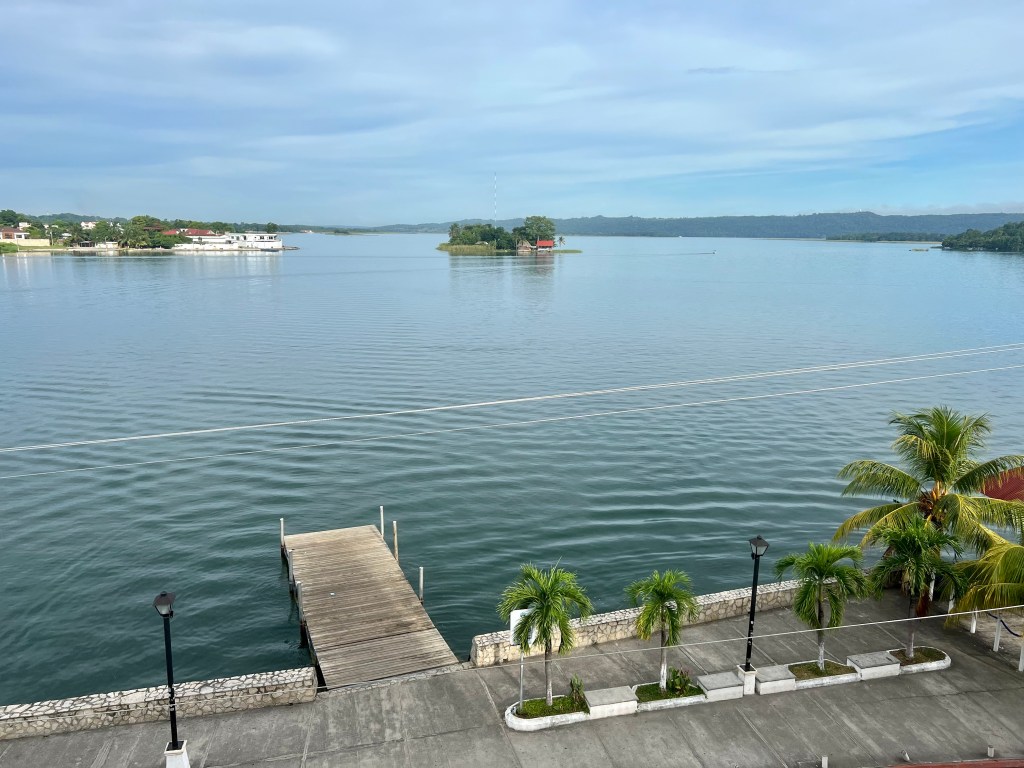
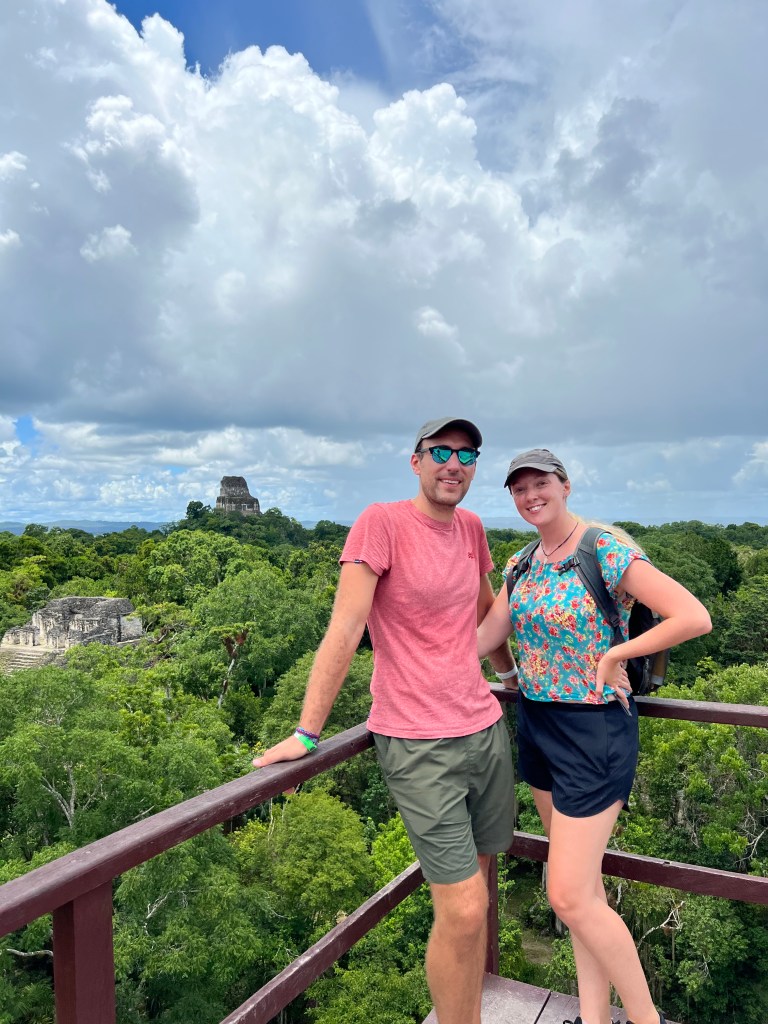
We booked a tour the next day to see the fascinating ruins at Tikal; one of the largest and oldest archeological Mayan sites.
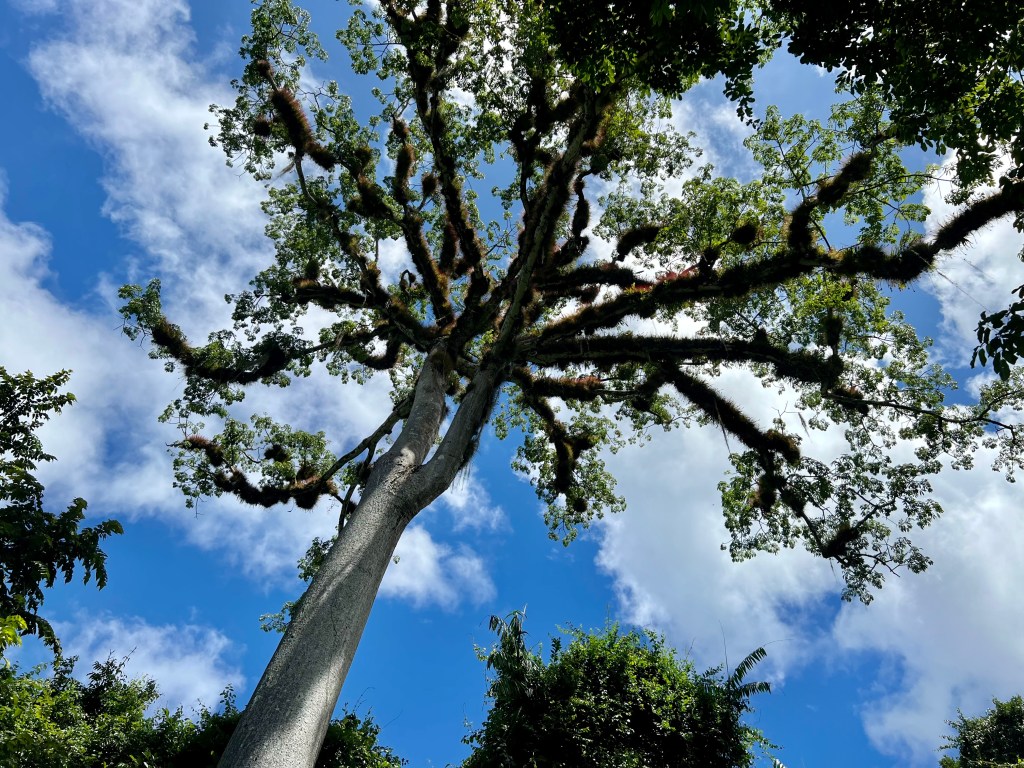
Tikal was the beating heart of the Mayan Empire, which began to thrive around 300 BC. Pictured above, is the national tree of Guatemala, Ceiba.
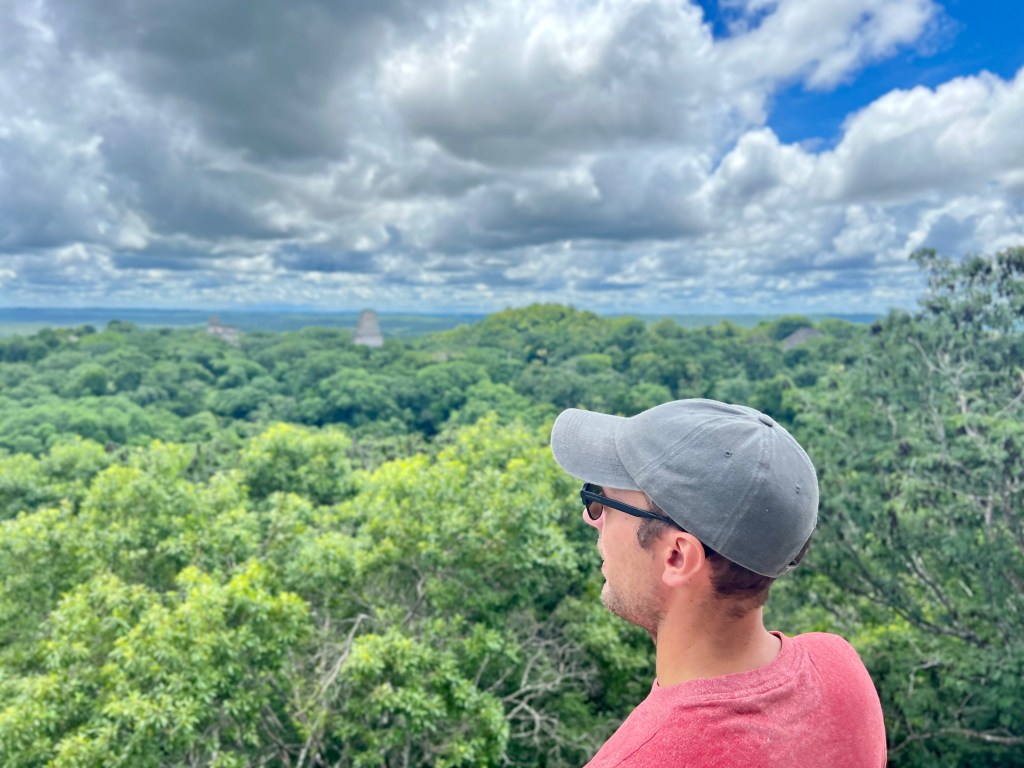
Tikal is a complex of ancient Mayan ruins deep in the rainforests of northern Guatemala. It has been a UNESCO world heritage site since 1979. The central part of the city contains 3,000 buildings and covers about 16 square km. Tikal was once home to an estimated 100,000 Maya.
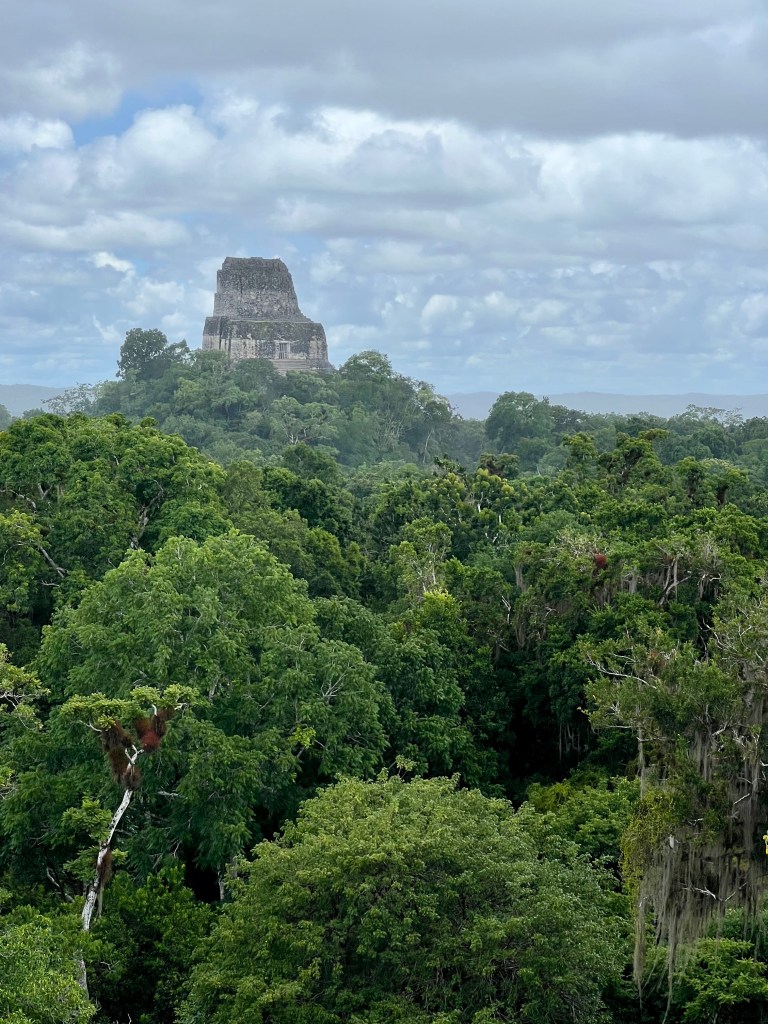
The buildings of Tikal are made from limestone, and include the remains of temples that tower over 70m high, along with royal palaces, smaller pyramids, residences, admin buildings, platforms and stone monuments.
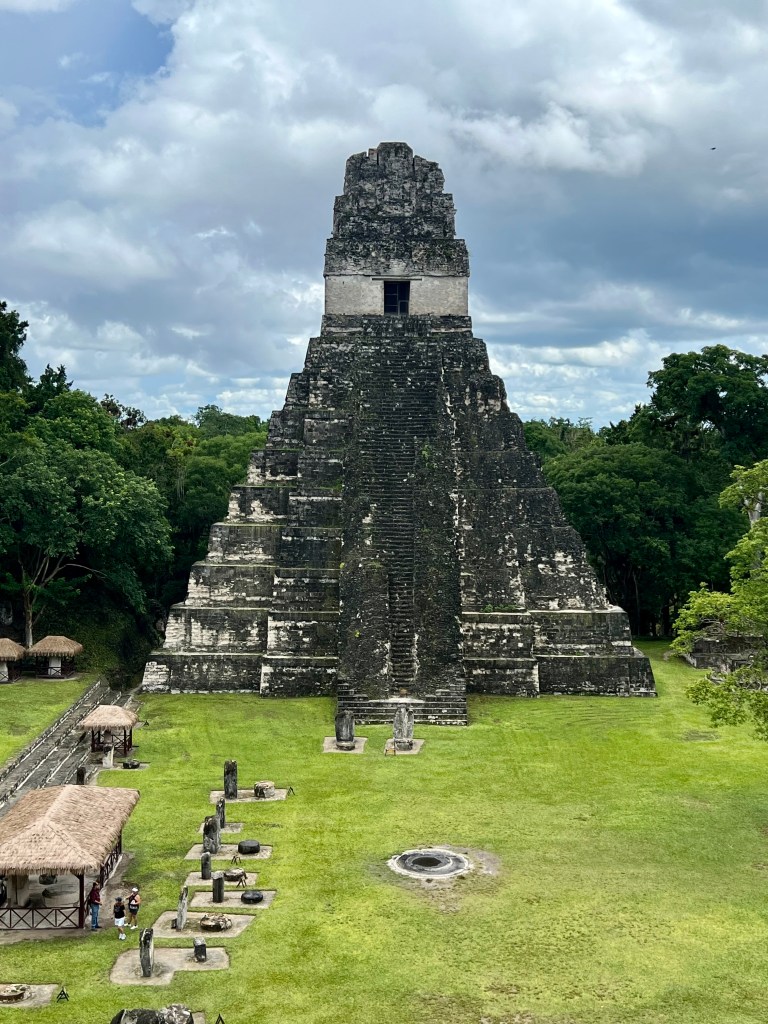
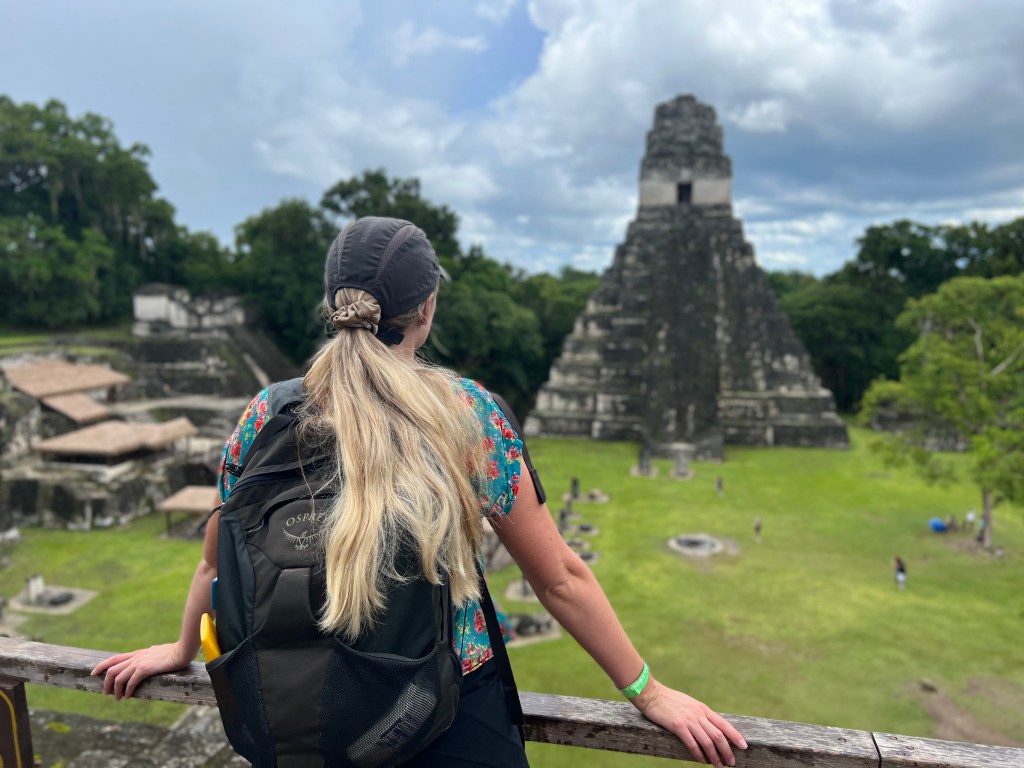
The most important Temple pictured below and above is Temple 1. It rises 47m high and has 96 original steps.
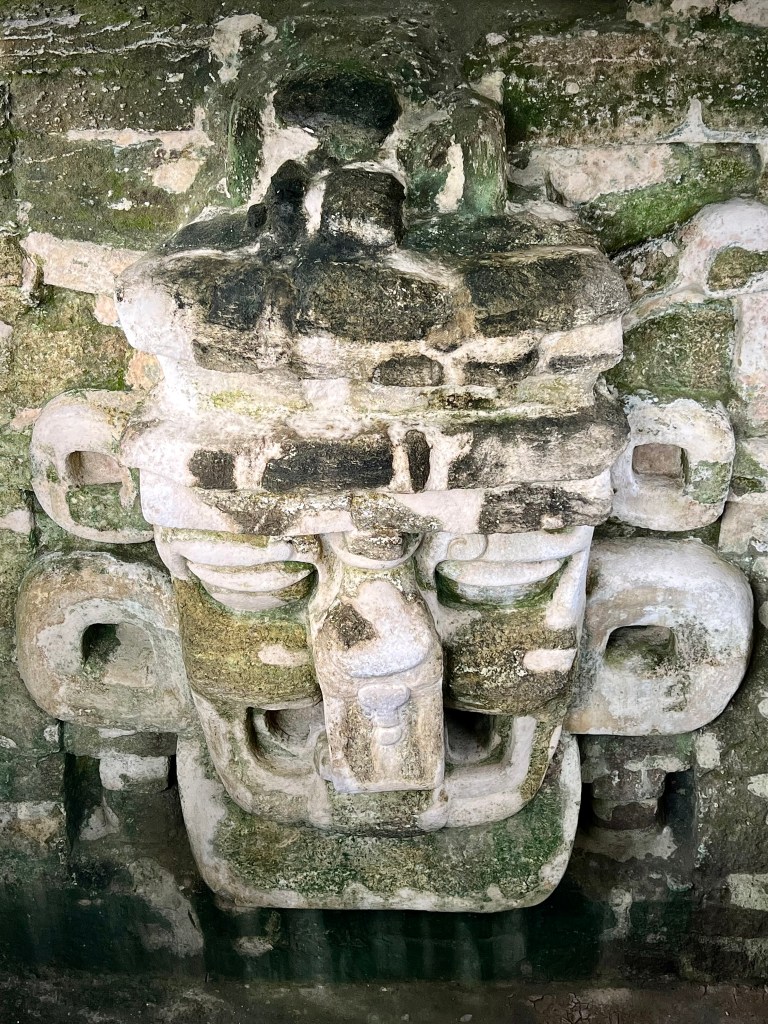
The Maya civilisation still lives on, with 6 million Maya living today in Guatemala, Mexico and Belize. Modern Maya religion is a mix of Catholicism and ancient Maya beliefs and rituals. Pictured below is their rain god, one of many gods whom they worshipped.
Nowadays religious Maya worship at mountain or cave shrines, and make offerings of chickens, candles and incense with a ritual alcoholic drink.
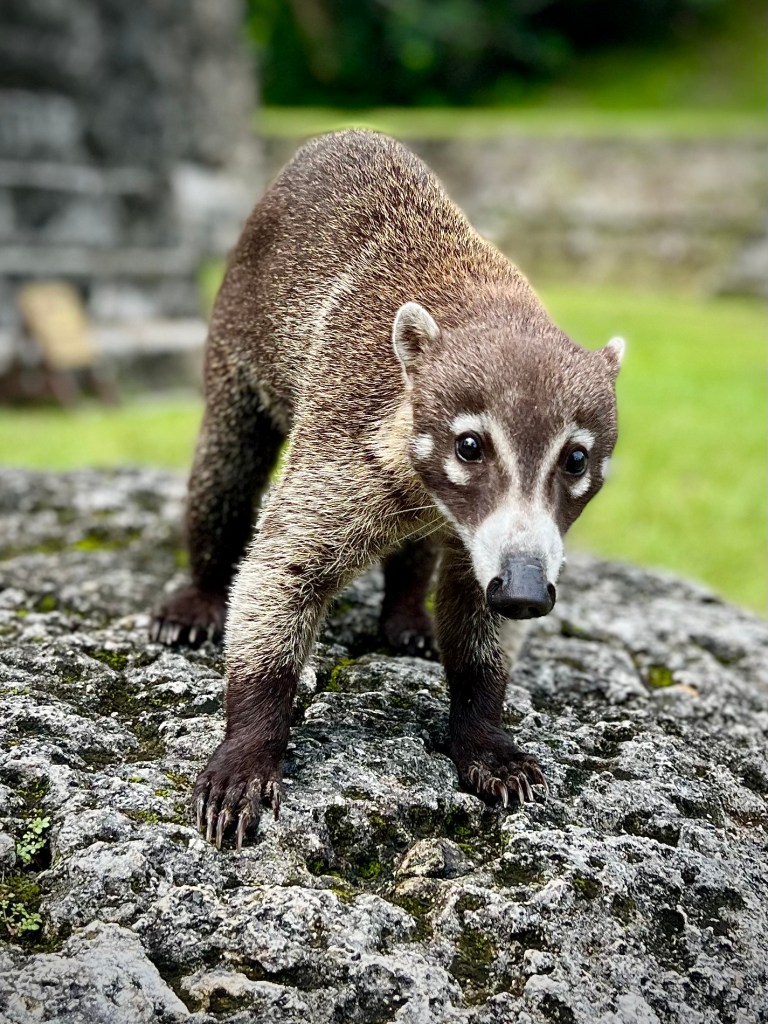
The place was teeming with wildlife; dragonflies, monkeys, wild turkeys, and some interesting creatures we had never seen before, in the background of the picture below.

We found out that they are called coatimundi. Furry mammals with long tails, pointed muzzles, and tree climbing claws. They are officially part of the raccoon family. They eat everything and anything apparently. Cute little guys!
We also saw a cicada for the first time. We hear them everywhere, but today was the first time we’d seen one.

After Tikal we got back and tuk tuk’ed to the nearest hospital. Using our limited Spanish and Google translate, we tried to explain Leon’s symptoms to the staff. We were seen by a lovely doctor within 20 minutes, wow, what an efficient service. Leon was again prodded and poked, and underwent three tests. His samples were taken by one of the staff on a motorbike and disappeared into the night.
An hour later, the tests were done and printed results had arrived via motorbike. Poor Leon had salmonella! We aren’t exactly sure where he got it from, as we usually share all our food and I felt absolutely fine. So we think it may have been the cute silver kitty Leon had been cuddling in Lake Atitlán. Of course, Leon learnt the hard way to wash his hands more regularly. The doctor gave us antibiotics, probiotics, and would you believe it she even gave us a lift home back to the island we were staying on. What a service! “No vino, no cerveza” she said as we left. Which of course, Leon could not stick to.
We left Flores very early on the bus the next morning, along with Barry and a Russian girl, and headed to cross the border into Belize, just as a brief stop to change buses on our way to Mexico. We had to swap buses / taxis 4 times, but the transitions were very smooth. The only issue was that we had to leave the Russian girl at the border as she hadn’t realised she needed a visa to enter Belize and wasn’t allowed in (for seemingly obvious reasons!). Oops.
 Leon and Amy’s Big Adventures